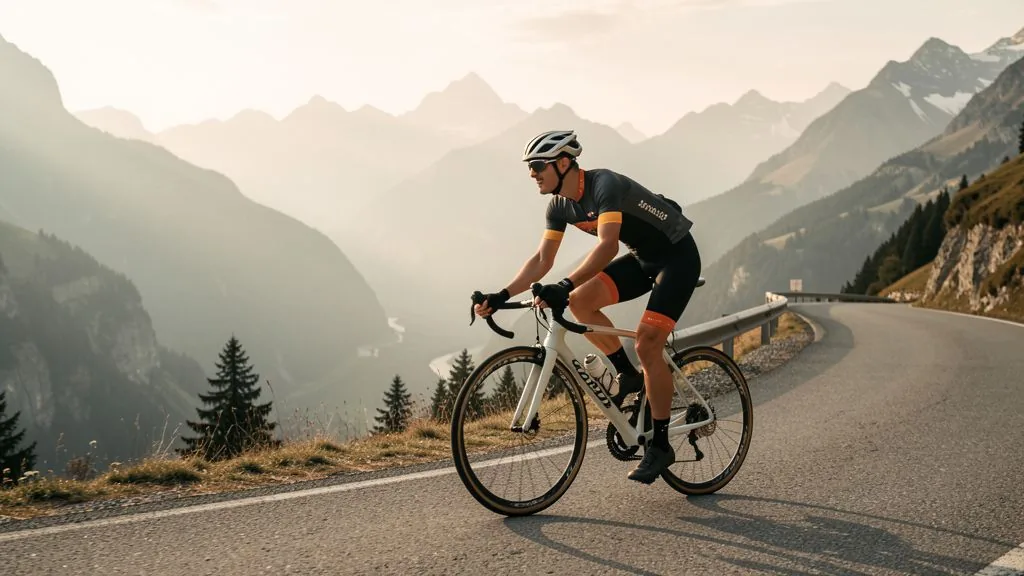
A road bike is the most efficient entry into endurance sports: easy on the joints, scalable from 30 minutes to all-day tours — and addictive. But the first few months decide whether the expensive new bike becomes a lasting hobby or a garage ornament. This guide shows how to approach training, technique and gear as a road cycling beginner — without the classic beginner mistakes.
The most important rule: riding slow makes you fast
The most common beginner mistake is not too little ambition but too much. Every ride becomes a mini race: full gas out of town, heart rate in the red, completely wrecked at the end. The result: performance plateaus within weeks, heavy legs, motivation dip.
Endurance performance is built at low intensity. About 80 percent of your riding should happen in Zone 2 — a pace at which you can comfortably hold a conversation. Your heart rate sits at roughly 65–75 % of maximum. This feels absurdly slow at first, but it builds exactly the physiological foundations that matter: more mitochondria, better fat metabolism, a stronger cardiovascular system. Once that base exists, you ride faster automatically — even at easy effort.
The logic is explained in the article on the 80/20 principle in endurance training: 80 % easy, 20 % hard — that is exactly how professionals train, just with more hours.
Training frequency: two to three rides per week
Two to three rides per week of 45–90 minutes are enough to start. Two rides maintain your fitness, three bring visible progress. Consistency over months is what counts — not a heroic four-hour ride once a fortnight.
A proven weekly rhythm for beginners:
- One longer easy ride (weekend, 60–90 minutes, later build to 2–3 hours): purely Zone 2, deliberately relaxed.
- One structured session (weekday, 45–60 minutes): after a 15-minute warm-up, 4–6 × 3 minutes at a brisk but conversational pace with 3 easy minutes between efforts.
- An optional third short spin (30–45 minutes): very easy, active recovery or technique focus.
Increase total volume by no more than 10 percent per week and schedule every fourth week as an easier deload week — the most underrated building block in the whole system.
Technique before speed: the five fundamentals
Road cycling looks simple, but it has technical elements worth practising deliberately from day one — they make you faster and, above all, safer:
- Cadence: Aim for a pedalling frequency of 85–95 rpm. Beginners typically grind too heavy a gear (60–70 rpm) and overload their knees. Lighter gear, quicker legs — your legs become more economical and your joints will thank you. The physiology is the same as running cadence.
- Core stability: Quiet upper body, arms slightly bent, weight on saddle and pedals — not on your hands. Numb hands and neck pain are almost always a posture problem, not bad luck.
- Cornering: Look through the turn (not at your front wheel), outside pedal down and weighted, inside pedal up. Brake before the corner, not in it.
- Shift ahead of the terrain: Change into the easier gear before the climb, not under load halfway up. Shift down before stopping — the restart will be easier.
- Drink and eat on the move: From 60 minutes of riding, practise grabbing the bottle and unwrapping food without stopping. On 2–3-hour rides aim for 30–60 g of carbohydrates per hour — the same fueling principle as marathon fueling.
Gear: what actually matters
The gear list at the bike shop is endless. For the start you need surprisingly little — and one thing matters more than everything else:
- Essential: Helmet (fitted in a shop), working brakes, lights for dusk, a repair kit (spare tube, mini pump, tyre levers, multitool).
- Very sensible: Padded cycling shorts (the biggest comfort gain per euro), a bike computer or phone mount for distance and cadence.
- Can wait: Clipless pedals (after 4–6 weeks, once handling is confident — practise clipping in and out in a car park), power meter (no earlier than after a year), carbon wheels, aero upgrades.
- The single most important point: Your riding position. A badly adjusted saddle causes knee pain that beginners wrongly accept as "normal". Saddle height is right when your leg is almost straight at the bottom of the pedal stroke (heel test: with your heel on the pedal, the leg must be fully extended). If you are serious, invest once in a professional bike fitting — it is the best one-off investment in the entire sport.
Realistic goals for your first year
Goals keep motivation high — if they match your starting point. Three stages that work:
- Months 1–3: Consistency. Make three rides a week a habit, build to 90 minutes in one go, automate the technique fundamentals.
- Months 4–6: First long tour (3–4 hours, 80–100 km) at an easy pace. First real climb ridden deliberately in an easy gear — climbing on a road bike is a topic with its own technique.
- Months 7–12: First event: a sportive or gran fondo at the short distance (50–100 km). If that hooks you, the gran fondo training guide is your structured next step.
The biggest gains, by the way, come not from harder training but from more easy kilometres. A beginner who rides consistently three times a week overtakes the sporadic all-out rider within six months — guaranteed.
Typical beginner mistakes — and how to avoid them
- Gears too heavy. "Pushing hard equals strong" is knee killer number one. Fix: treat 85–95 rpm cadence as a fixed value and choose gears around it.
- Every ride a time trial. Without easy kilometres there is no base. Fix: 80 % Zone 2 as a rule, and use the bike computer to keep yourself honest.
- Too much too soon. Doubling volume in two weeks leads to overload, knee or Achilles problems. Fix: the 10-percent rule and every fourth week easy.
- Ignoring recovery. Muscles adapt during rest, not on the bike. Fix: sleep and rest days are part of the plan — see sleep and endurance performance.
- Bad nutrition on long rides. Eating only when hunger strikes is too late — bonking on the bike comes suddenly and brutally. Fix: from kilometre 30, small amounts of carbohydrate every 20–30 minutes and regular drinking (see hydration during endurance sport).
How Peakora supports you as a road cycling beginner
Peakora builds your cycling plan on exactly these principles: an easy aerobic base as the foundation, one structured intensity session per week, and automatic deload weeks in a four-week rhythm. You set your goal — say "first 100 km tour" or "gran fondo short distance" — and the engine defines every session with duration, intensity zone and purpose. The recovery monitor detects when you are overdoing it and adjusts the plan before ambition turns into overload. That way you train like an experienced athlete from day one — just with volumes that match where you actually are.
Frequently asked questions about starting road cycling
How often per week should a road cycling beginner train?
Two to three rides per week of 45–90 minutes are the ideal starting point. Two rides maintain fitness, three deliver visible progress. Consistency over months matters more than frequency — steady three times beats alternating between two and five.
Do I need a power meter as a beginner?
No. A power meter is a tool that pays off only after one to two years of structured training. At the start, heart rate and perceived effort are enough: if you can still hold a conversation while riding, you are training in the right base zone.
How quickly will I improve as a road cycling beginner?
In the first three months, power output gains of 10–20 percent are realistic because the body adapts to new stress. After that the curve flattens: another 5–10 percent per year is achievable with consistent training. The biggest lever remains low-intensity volume.
Road bike or gravel bike for beginners?
For pure road riding and longer tarmac tours, a road bike is more efficient. A gravel bike makes sense if you also want to ride dirt and forest tracks — it is more comfortable and versatile but roughly 1–2 km/h slower on pavement. Both work equally well for starting structured training.
Start structured training with Peakora
Your AI training plan for road cycling: easy base, clear intensity, automatic recovery — tailored to your first big goal. Start free, no credit card required.
Start for free