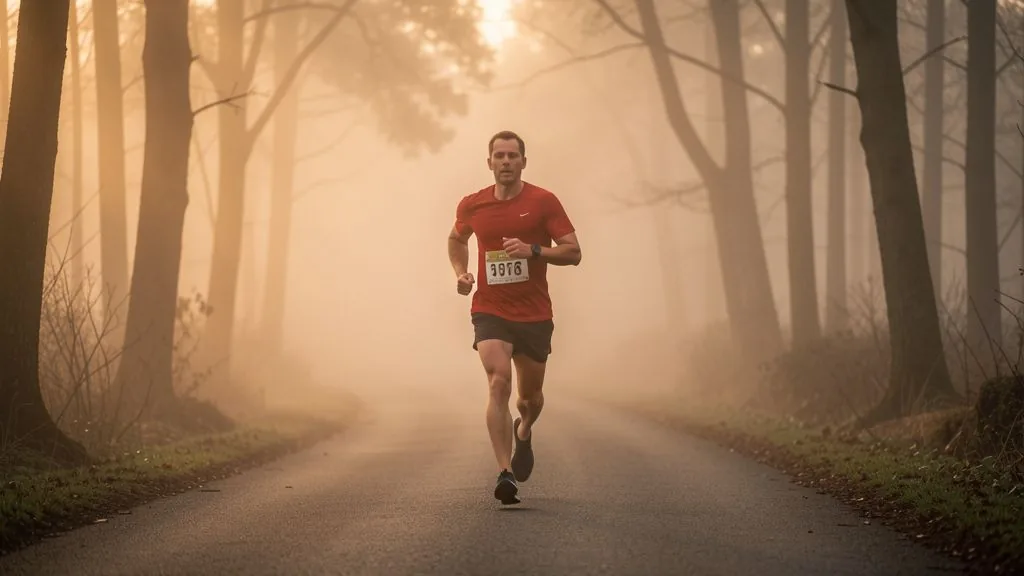
The base phase barely starts and the first cold arrives — along with the question of whether training strengthens your defences or weakens them. Both are true. In a moderate dose, regular endurance training is one of the most effective immune boosters there is. In an excessive dose the effect reverses, and that is exactly where the infections come from that cost you whole training weeks.
What training actually does to your defences
Every session is a short stress stimulus for the body. Working muscle releases signalling molecules that mobilise immune cells, blood flow increases and core temperature rises slightly — all of which temporarily improves immune surveillance. People who train regularly and moderately therefore have measurably fewer infection days over the course of a year.
The best-known description of this relationship is Nieman's J-curve: inactive and moderately active people sit at the low end of infection risk, while high-volume elite athletes sit at the upper end. The curve does not rise linearly — it tips. The relevant question is therefore not whether training helps the immune system, but how much of it.
Numbers come from survey studies of runners, among others: those running at least 20 kilometres per week report considerably fewer cold days than inactive people. Part of that effect runs not through the immune system itself but through better sleep, more stable body weight and lower stress levels that come with regular training.
The open window: 3 to 72 hours after hard efforts
After a very long or very intense session — a marathon, a long run, a race, a hard block of intervals — immune defence is temporarily reduced for several hours up to three days. Colloquially this is called the open window. Several things combine to produce it: the stress hormone cortisol stays elevated, glycogen stores are empty and the concentration of antibodies in saliva (IgA) drops in the short term.
The context matters: the open window is not a total failure of the immune system but a shift in readiness. It does not mean you will inevitably get infected after every long run. It means that during those hours you are less able to fend off viruses you are inhaling anyway. That is precisely why infections cluster in the weeks after races and training camps.
The three levers: dose, recovery, environment
Immune-friendly training is largely load management. Three variables decide, in practice, whether you get infected:
- Progression. Volume may rise, but not in jumps. The rule of thumb stands: no more than 5 to 10 percent per week, and after two to three build weeks a deload week at 60 to 70 percent of volume. Skip that week and you collect exactly the combination of sustained load and missing recovery that studies link to more infections.
- Intensity distribution. The 80/20 principle also makes immunological sense: plenty of easy volume, little intensity. Too many hard sessions in quick succession keep cortisol permanently elevated. More on this in the article on 80/20 training.
- Recovery. Sleep is the single strongest immune factor — more below. It also includes one or two genuine rest days per week and a monthly rhythm that puts a quieter week after a peak of load. When your form curve (TSB) runs deep into the negative, infection susceptibility rises, because the same number also signals deep muscular and hormonal fatigue.
Got a cold — train or not?
The practical decision comes down to one rule: above the neck versus below the neck.
- Above the neck (mild runny nose, blocked nose, slight scratchy throat, no fever): cautious, easy training is generally acceptable. Cut volume and intensity sharply, run easy instead of doing intervals, and allow yourself to stop at any point.
- Below the neck (fever, cough, aching limbs, stomach or gut problems, marked exhaustion): no training. An infection with fever and muscle involvement also stresses the heart, and physical load in that phase can have serious consequences. Take a complete break until symptoms have fully resolved — then return step by step.
- After the infection: expect a slow return and plan an extended break. A useful orientation: take as many easy days as the infection lasted, then start at roughly half your usual volume. The detailed plan is in the article on training with a cold.
There is a second reason the break matters: a cold trained through typically lasts considerably longer, and a harmless infection can develop into myocarditis. Missing five easy days is always cheaper than missing three weeks.
What really counts in practice
- Carbohydrate around hard sessions. Empty glycogen stores go hand in hand with higher cortisol and a deeper immune dip. Eat before long sessions, take carbohydrate during and after — that is the most practical immune measure in endurance sport. Details in the article on post-workout nutrition.
- Vitamin D only when deficient. Low vitamin D is common in the winter months. Supplementing without a confirmed deficiency, however, shows no protection against respiratory infections in trials. So: get the level tested and correct a deficiency specifically.
- Vitamin C and zinc. There is some evidence for the course of an established infection, but little for prevention. A balanced diet covers requirements. High-dose daily vitamin C for cold prophylaxis does essentially nothing for endurance athletes.
- Hygiene in crowded spaces. Wash your hands, avoid standing around crowded changing rooms in winter, do not share bottles. It sounds trivial, but it is epidemiologically one of the most reliable measures there is.
- Use the open window instead of fearing it. Rather than sealing yourself off in the hours afterwards: dress warmly and schedule real recovery. That lowers susceptibility just as effectively, and cold, dry winter air matters too — see winter running for the practical side.
A 60-second immune check
A small set of self-observations is enough to notice that your defences are currently overloaded. If you see two or more of these at the same time, plan the coming week as a deload week:
- Resting heart rate in the morning more than 5 to 7 beats above your normal value.
- Heart rate variability below your personal baseline for several days in a row.
- Sleep quality worse than usual while sleep duration is longer — a typical pattern when load starts to bite.
- Performance drop at unchanged load: your usual tempo session becomes a struggle and heart rate runs high.
- A scratchy throat in the morning that stays through the day — often the first marker of an emerging infection.
None of these markers is specific on its own, but in combination they are informative. Track them over weeks and you will learn your own pattern, letting you react earlier than with the usual "I'll give it a try" test.
Common mistakes
- Training through a cold. The classic with the highest cost. Five days off are cheaper than three forced weeks off.
- Using the immune system as an excuse for no training. The moderate dose is the real gain — protecting yourself completely costs you both fitness and the immune advantage.
- Hard sessions inside a deload week. Then it is not a deload week. The week only works if both volume and intensity come down.
- High-dose supplements instead of the fundamentals. No product replaces sleep, carbohydrate and sensible volume progression.
- Training camps without a recovery window. Two sessions a day for a week with no rest day produces exactly the sustained load that shows up as higher infection rates — double sessions need to be dosed.
- Going straight on after a race. The infection week often comes not before but after the race. One easy week, then build.
How Peakora keeps load in check
The immune question is almost always a load question, and that is exactly where the Peakora engine comes in: it calculates training stress (TSS) after every session and combines it into fitness, fatigue and form. The TSB value shows whether a week can take more or whether a deload is due — and plans tapering, deload weeks and volume progression accordingly, without you having to do the arithmetic. Peakora is not a medical tool: with fever, a persistent cough or unclear symptoms, the decision belongs in medical hands.
Sleep: the strongest immune factor you can plan
Of all measures outside of training, sleep has the largest and best-documented effect on immune defence. A single shortened night already measurably reduces natural killer cell activity, and in controlled sleep-restriction studies over several days, susceptibility to infection rises clearly — more participants in the short-sleep group fell ill than in the normal-sleep group.
For endurance athletes this means: your easy week is not the week with less running, but the week with more sleep. Two or three nights of seven to nine hours before a hard session or a race do more for your defences than any supplement. The reverse also holds: if you are building volume while consistently sleeping under seven hours, you are stacking exactly the double load that produces training-camp infections. More on this in the article on sleep and endurance performance.
Frequently asked questions about the immune system in endurance sport
Does endurance training strengthen the immune system?
Yes, in moderate doses. Regular endurance training improves immune surveillance and increases natural killer cell activity. In studies, physically active people report around 20 to 30 percent fewer days with cold symptoms than inactive people.
What is the open window after training?
The period of roughly three to 72 hours after a very hard or very long session during which immune defence is temporarily reduced. It is explained by elevated cortisol, metabolic stress and a short-term drop in salivary antibodies.
Should I train with a cold?
Your symptoms decide. With complaints above the neck such as a runny nose or mild sore throat, easy training is usually acceptable as long as there is no fever or cough. With fever, aching limbs, a cough or stomach problems, do not train.
How much training is too much for the immune system?
Too much starts where recovery no longer keeps up. Typical signals are sustained high load without a deload week, a rising resting heart rate, poor sleep, a drop in performance and frequent infections in short succession.
What helps the immune system most in winter?
Sleep, sufficient carbohydrate around hard sessions and moderate increases in volume. Low vitamin D in winter should be checked medically and only corrected when a deficiency has been confirmed.
Plan your training with Peakora
Load management with TSS and a form curve, automatic deload weeks and tapering. Start for free, no credit card required.
Start for free