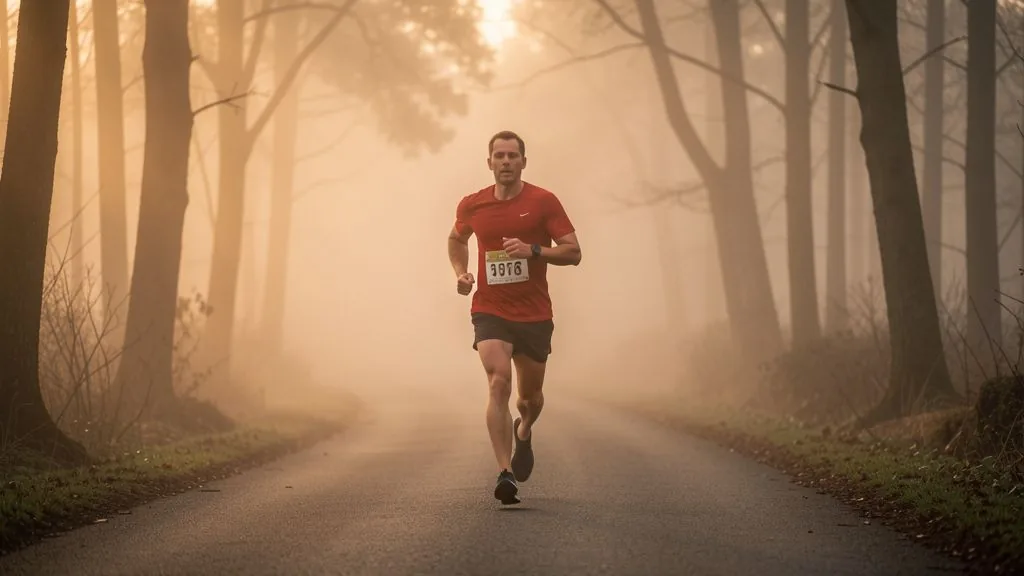
Everyone knows overheating — hypothermia is the quieter, underestimated risk. It does not only affect mountaineers in winter: a long run in autumn rain, a cool ride in the wind, or cooling down after the finish in a triathlon is enough. Knowing the early warning signs and reacting correctly keeps you safe — and lets you train sensibly through the cold season too.
Why cold is underestimated in endurance sport
During exercise the body burns energy and produces heat. As long as the effort is high, the body feels warm — even at low temperatures. That is the trap: during training you barely notice the cold, because the muscles are working and blood flow is high. As soon as the intensity drops or the session ends, the balance flips within minutes. The body produces far less heat, the clothing is soaked in sweat or rain, and core temperature starts to fall.
Then comes the biggest single loss: in cold weather the head and neck release a relatively large amount of heat, because many blood vessels lie close to the surface there. Run on with no hat and a wet neck and you lose more heat through that area than you would like. How to dress for this is covered in choosing running clothing.
How your body loses heat
Heat escapes through four pathways, and in sport almost always several of them act at once:
- Convection: moving air — wind and airflow — carries heat away from the skin. That is why a windy day feels far colder than a calm one at the same temperature.
- Evaporation: sweating cools you. That is intended in sport, but a disadvantage in the cold, because sweat soaks the clothing and cools further. Wet clothing conducts heat up to 25 times faster than dry air.
- Conduction: direct contact with a cold surface, metal or water draws heat away very quickly. That is why water at 15 degrees cools you more than air at 15 degrees.
- Radiation: the body gives off heat to colder surroundings even without direct contact — especially at exposed areas.
In endurance sport the combination is what makes it dangerous: you sweat, get wet, the wind cools the wet skin — and during the cool-down after training the heat source of movement is gone. Running in winter shows how to train well in the cold without becoming hypothermic.
The stages of hypothermia
Hypothermia is a continuum. Medicine divides it by core body temperature — and each stage has clear signs:
- Mild hypothermia (35 to 32 degrees): heavy shivering, goosebumps, pale and cold skin, cold hands and feet, but still fully responsive and clear-headed. Now is the time to act.
- Moderate hypothermia (32 to 28 degrees): shivering fades or stops entirely, speech becomes slurred, movements are uncoordinated, the person turns apathetic and confused. The absence of shivering is especially dangerous because it falsely looks like improvement.
- Severe hypothermia (below 28 degrees): loss of consciousness, slow shallow breathing, barely detectable pulse, muscle stiffness. This is an emergency.
Core temperature is not measured with an ordinary skin reading, because in hypothermia skin temperature drops sharply while core values are still higher. In practice the clinical picture counts, not the number. How heat and cold affect performance in general is explained in the related article heat training for the opposite case — with both extremes, thermoregulation is what decides.
Recognising the symptoms
The first signs are often harmless and get ignored. If you pay attention, you catch them early:
- Shivering and goosebumps that do not go away even though you keep running.
- Cold, pale or bluish skin on fingers, lips and face that will not warm up.
- Fading performance and coordination, unsteady running, stumbling, slurred speech.
- Fatigue and exhaustion far beyond the normal level — a classic in changing weather.
- Confusion, apathy and withdrawal, past this point self-perception is impaired.
Particularly insidious: the person affected often does not notice how far along they are. That is why the view from outside — by a training partner or coach — is decisive. Anyone who is hypothermic should stop running actively and warm up passively instead.
First aid: what actually helps
With suspected hypothermia, the order matters more than the intensity of the intervention:
- Out of the wind and the wet. Wind protection and dry ground are the first step. Remove wet clothing immediately — it is the biggest heat loss factor.
- Warm up passively. Wrap the person in blankets, sleeping bags or dry clothing, the head too. Warm up as quickly as possible, but slowly from the outside in.
- Warm drinks. If the person is conscious, warm, sugary drinks — not alcohol, which dilates vessels and cools further.
- Warm actively, do not rub. Gentle movement only makes sense in mild hypothermia. In moderate hypothermia physical exertion is risky, because it draws blood flow to the periphery and can lower core temperature further.
- Do not move an apathetic person. In case of confusion or unconsciousness call emergency services at once and keep the person as still as possible — rough movement can trigger cardiac arrhythmias when the heart muscle is badly cooled.
The simple rule: as long as someone is clearly responsive and shivering strongly, the situation is serious but manageable. As soon as the shivering stops, the person seems confused or drifts away, it is a medical emergency.
Prevention: dry, windproof, planned
The best treatment is prevention. Three rules cover most cases:
- Stay dry. Moisture-wicking clothing works because it moves sweat outward. Cotton holds moisture and then cools. In rain, add a waterproof layer on top.
- Windproof at the exposed spots. Head, neck, hands and chest are the main loss zones. A hat, thin gloves and a windproof layer do more than a thick second layer on the torso.
- Arrive dry. After the run, change immediately — do not keep going or stretch in wet clothing. For rides, plan dry spare clothing for the finish or the stop. For the finish area on race day in the race day check too: spare clothing is mandatory, not a luxury.
In cool, wet conditions the "feels like" temperature counts, not the thermometer. Rain and wind cool far more than dry cold in calm air — which is why forecasting temperature, wind and precipitation together is the decisive factor.
Cold in triathlon and cycling
In triathlon, several risk factors meet at once. The swim start in cool water pre-cools the body, the switch to the bike brings airflow — with wet clothing, the perfect heat loss. And at the finish the circulation is spent while the body is still wet. That is why spare clothing counts in triathlon: dry socks, a windproof layer and a dry top for the bike. To be safe, plan the order of transitions so that moisture does not unnecessarily meet airflow — the details are in T1 and T2 in triathlon.
The effect is stronger in cycling than in running too. Because of airflow, the body cools at temperatures around 10 degrees as much as when running at zero. Anyone who has sweated on a climb freezes on the descent as soon as intensity drops. A windproof vest, overshoes and gloves therefore belong in every cool ride — the physics behind it is in cycling aerodynamics, because windproofing and air resistance are two sides of the same coin.
Cold hands, cold and the right balance
Not every chill is hypothermia. Cold hands and feet are normal in endurance sport, because in the cold the body reduces blood flow to the extremities to protect the core. That is a sensible protective response — only when core functions falter does it become dangerous. It is important to know the difference: cold fingers are unpleasant but harmless. Confusion and absent shivering are the real alarm sign.
When training in the cold, the same rule applies as in heat training: intensity according to the conditions, not a fixed target. In the cold, muscles take longer to warm up, performance is initially reduced, and post-training cooling is underestimated.
Planning training in the cold properly
Cold is not an obstacle, it is a question of preparation. A few principles:
- Warm up long enough. In the cold it takes longer for muscles and circulation to reach operating temperature. Start at an easy pace and raise the intensity only gradually.
- Layering with function. Several thin layers regulate heat better than one thick one. The outer layer should be windproof but breathable.
- Change immediately after training. Recovery is the warmest wish but the coldest reality: wet clothing cools within minutes. Warm, dry clothing right after the run is the most important step.
- Plan the way back. For a point-to-point session or a ride: where can you change if needed? Anyone who sets off on a cool day without spare clothing is planning in a cooling risk.
- Have a warm drink ready. A flask you bring along or a warm drink at the finish speeds up rewarming after the session.
Common mistakes
- Starting too warm. Over-dressed clothing leads to heavy sweating, and the moisture cools all the more after training. Better: make the first layer removable.
- Running on wet. Anyone out in the rain without a waterproof layer who keeps running in wet clothing cools down insidiously without noticing.
- Dismissing shivering as harmless. Heavy, persistent shivering that does not go away is a clear call to act — not "just the cold".
- Ignoring hypothermia instead of overheating. Heat is discussed, cold is often smiled at. Both extremes challenge you equally — only with cold the risk is quieter.
- Alcohol to warm up. A sip to settle the nerves is the classic mistake: alcohol dilates skin vessels, increases heat loss and worsens self-perception.
How Peakora handles weather and conditions
The Peakora engine plans your training by load and effort, not by a fixed pace that suits the conditions. In cold, rain or wind, an easy run stays an easy run — even if you are slower. The recovery monitor records the real load of the session and adjusts the following days. That way the training stimulus stays in the right place, whether in a heatwave or a cold snap. Terms around effort and recovery are covered in detail in the Peakora training library.
Train with Peakora
A training plan built on load, not fixed targets — adapting to cold, weather and your daily form. Start free, no credit card required.
Start freeFrequently asked questions about hypothermia in sport
At what point is it called hypothermia?
Hypothermia is defined as a core body temperature below 35 degrees Celsius. Mild hypothermia is between 35 and 32 degrees, moderate between 32 and 28 degrees, and below that severe hypothermia begins, which is life-threatening.
What are the symptoms of hypothermia while running?
The first signs are strong shivering, cold pale skin and goosebumps. Then come coordination problems, slurred speech, confusion and a fading of the shivering. If the shivering stops even though it is cold, that is a warning sign of moderate hypothermia.
Can you become hypothermic while running even if it is not icy?
Yes. Wet clothing and wind cool the body far more than dry cold in calm air. At five degrees, rain and wind, the perceived cold often equals zero degrees or below — then even a longer cool-down after training is enough to bring on hypothermia.
What should you do in case of hypothermia?
Get out of the wind, remove wet clothing, wrap the person in dry blankets or clothing, rewarm slowly from the outside in, and offer warm drinks. In case of confusion, unconsciousness or absent shivering, call emergency services immediately and do not move the person actively.