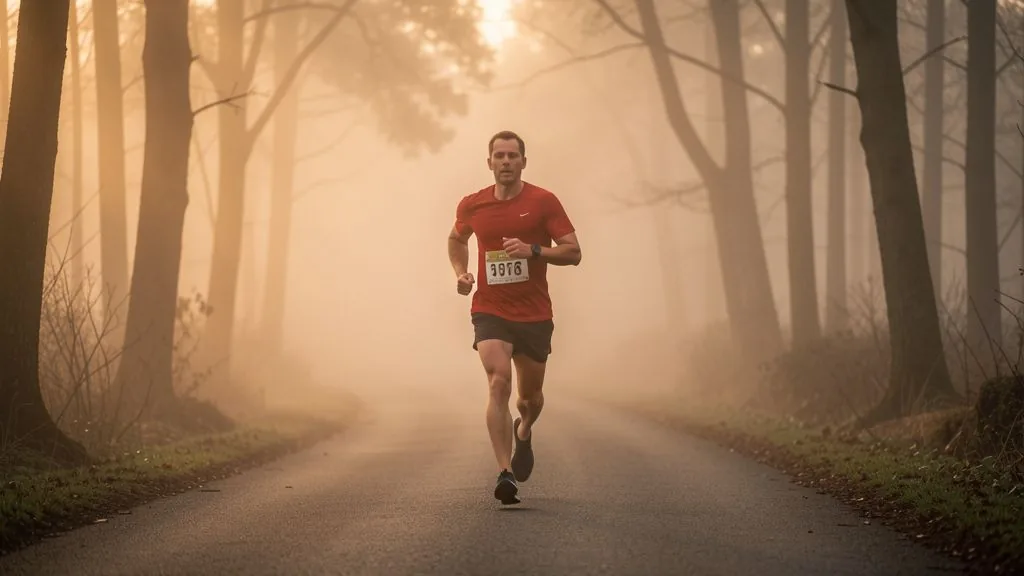
Gear does not win a marathon — but the wrong gear can lose one. Blisters at kilometre 25, a seam that chafes raw after two hours, a gel that turns your stomach: everything you wear and eat on race day is a variable you can control in advance. This article sorts the decisions from head to toe — and says what actually counts.
The iron rule: nothing new on race day
It is old, it is boring, and it still gets broken every weekend: no piece of gear gets its debut on race day. The reason is not caution for its own sake but statistics — the most common problems in the finish area are blisters, chafing and gastrointestinal distress, and all three almost always come from unknown material or unknown products.
In practice: everything you use in the race has survived at least one long run and one faster session beforehand — under the same conditions (heat, rain, distance). Someone running a marathon in July does not need to test a rain jacket. In autumn, however, a cap and gloves should have been tried once at 8 °C.
Shoes: carbon or not?
Carbon plates in the midsole reduce energy loss at the ankle and increase forefoot stiffness. The effect is well documented at roughly two to four per cent of running economy depending on the study — over a 3:30 marathon that is four to seven minutes, if the legs cooperate.
There are three caveats. First: the added stiffness shifts load onto the calf muscles and the Achilles tendon. Second: carbon shoes need adaptation, ideally three to five sessions including long runs. Third: for races under 10 kilometres and on technical trails the gain is small or negative. What exactly sits in the midsole and for whom it pays off is covered in Carbon-plated running shoes.
If you are not racing in carbon: a second, lighter pair in the same fit is usually the better race-day choice than a shoe you have never trained in. Buying criteria are in Buying running shoes.
Socks: the underestimated factor
Over a marathon your foot takes roughly 35,000 steps — and every single one creates a tiny shear movement between foot, sock and shoe. Cotton absorbs moisture, gets heavy and loses its shape; that is exactly how friction and blisters start. The rules are short:
- Material: synthetic, merino or a blend. No cotton content on race day.
- Seamless: flat toe seams prevent pressure points between the toes.
- One pair or two? One thin, well-fitting pair is enough. Two pairs can constrict the foot inside a tight shoe — in endurance sport that only helps if the shoe fits generously.
- Length: for races beyond 20 kilometres, ankle-height or short compression socks are the safer choice than trainer socks.
If you are prone to blisters you already know the pattern from training — causes and prevention are covered in Blisters and chafing in running.
Clothing: close-fitting, no experiments
Two criteria decide race clothing: it must not chafe and it must not flap. Anything loose on the body costs energy and — more importantly — creates movement at fabric edges that rub raw over hours.
- Material: polyester, polyamide or a blend with elastane. Cotton weighs two to three times as much when wet and does not dry against the skin.
- Fit: close-fitting but not restrictive. Over a marathon, shorts with pockets or a running belt for gels are far more practical than stuffing your singlet.
- Seams: flat seams at the armpits, chest and crotch. If you tend to chafe, wear a close-fitting base layer over bare skin on race day — the most reliable protection for men.
- Race bib: never pin the bib through thin fabric with ordinary safety pins. A bib band or magnets is the better choice over 42 kilometres.
The classic race-day mistake: unpacking the singlet at the start because it is new. A new shirt with a polyester-elastane blend feels perfect in the shop and chafes under the arm at kilometre 30.
Temperature rules: by degrees, not by feel
The start corral is where most people are dressed too warmly. A rule of thumb from practice: you should feel slightly chilly before the start. After two kilometres the body produces so much heat that 8 °C feels like 15.
- Above 18 °C: shorts, singlet, cap, no sleeves. Sweat losses rise sharply, so the fluid strategy from Hydration when running belongs in the plan.
- 10 to 18 °C: shorts and singlet, optional short sleeves. The standard case for spring and autumn races.
- 0 to 10 °C: tights, sleeves, thin gloves and a headband. Gloves are the best value for money — cold hands cost motivation, not performance, but motivation counts.
- Below 0 °C: layering with wind protection, but no thick insulation on the torso. An old jacket handed to a helper before the start is standard at large races.
In the heat, adjustments come on top that are not on the sign: light-coloured clothing, ice or cold water on the neck at aid stations, and a race pace that respects the temperature. The adjustments by temperature are described in Heat training for running.
Fueling gear: gels, bottles, stomach
The stomach is the most critical piece of “gear” on race day — and the only part you cannot swap out. Two rules apply to every form of fueling:
- Amount per hour: in races over two hours, 60 to 90 grams of carbohydrate per hour is realistic if trained. Anyone who has never practised it is far safer at 30 to 45 grams per hour.
- Form: gels are practical but concentrated. Some tolerate liquid fueling or chews better than others — your stomach decides in training, not on race day.
In practice: pack your fuel so it opens with one hand without stopping. A running belt or the side pockets of your shorts beat the singlet in every respect. How much carbohydrate you need and how intake builds up over the final days is covered in Fueling for the marathon and Carb loading.
The race-day checklist: pack it the night before
- Bib + fastening: bib band, magnets or pins. Bib collected? Never leave pickup to race morning.
- Shoes + socks: fresh, clean and dry. No swaps in the morning.
- Clothing for start and finish: race kit plus something for after the finish so the body does not cool down too fast.
- Fuel: as many gels as the plan requires, plus one spare.
- Anti-chafe cream for the crotch, armpits and nipples — the most common source of pain in a marathon.
- Blister plasters and tape: better to have them than to need them.
- Sunscreen and lip balm for races from midday onward.
- Change of clothes and a bin bag for the finish bag, plus the official drop bag labelled with your bib number.
Extremely valuable: a second small bag with spare socks and gels inside your drop bag. Anyone finishing with wet feet is far more comfortable afterwards in dry socks. A tested pacing strategy belongs in the plan just as much as the gear; the distribution of kilometres is in Marathon pacing strategy.
The seven most common gear mistakes
- New shoes without adaptation. The most common cause of blisters and foot pain from kilometre 20 onward. Carbon shoes need 3–5 test runs.
- Cotton socks. Wet and heavy — the most direct route to a blister on the heel.
- Too many layers. The body produces far more heat after two kilometres than expected. Starting too warm costs energy and fluid.
- Seams in untested places. Seams at the armpit, chest or crotch that never chafed in training because the runs were shorter.
- Fuel from a stranger's hand. An unknown gel at kilometre 30 is a game of roulette with your stomach. Take nothing you have not tested.
- Bib not secured. Flapping bibs are a real nuisance in wind and a disqualification risk at some races.
- Gear chosen for looks rather than fit. Pretty singlets that cut in score no points at the finish.
How Peakora steers race preparation
Gear is the last link in a chain that starts weeks earlier in the Peakora engine: tapering is built in as its own phase, volume drops to plan, short race-pace stimuli stay in place, and race week opens with sharpening sessions. Because the recovery monitor tracks your form (TSB) and sleep in parallel, you can see in black and white whether gear stress, travel stress and training load add up to too much. For the race itself, race time prediction provides a realistic corridor — so the pace fits the gear, not the other way around.
Frequently asked questions about race day gear
What should I wear for a marathon?
Close-fitting technical fabric — polyester or elastane, never cotton. At 10 to 15 °C, shorts and a singlet are enough; wear seamless underwear underneath. Everything you wear on race day should have been tested at least once on a long run.
Are carbon shoes mandatory on race day?
They measurably make you faster — studies suggest two to four per cent. But they are not mandatory: they load the calf and Achilles tendon more heavily and need several sessions to get used to. They pay off for races from 10 kilometres upward, far less for shorter distances.
When should I test new gear?
Never in the week before the race. Every new item — shoes, socks, gels, clothing — belongs in at least one long run and one faster session, at least two to three weeks before the start. There are no exceptions to this rule.
What should I do about rain on race day?
A light water-repellent vest, close-fitting clothing, a cap with a brim and Vaseline on the vulnerable spots. Cotton soaks up water and gets heavy. Wet socks are the most common cause of blisters — so wear thin synthetic socks and shoes that hold the foot securely.
Do I need to carry fuel for a half marathon?
For most runners, yes — from roughly 90 minutes of racing, carbohydrate becomes useful because glycogen stores start to run low. For a half marathon under 1:30, one or two gels are enough; for a target of 1:45 to 2:00, two or three make sense. If you finish under 75 minutes, you generally need no fuel during the race, just a solid breakfast three hours before.
Plan your race preparation with Peakora
Periodisation with automatic tapering, realistic race time prediction and a fueling calculator for every race-day feed. Start free, no credit card required.
Start free