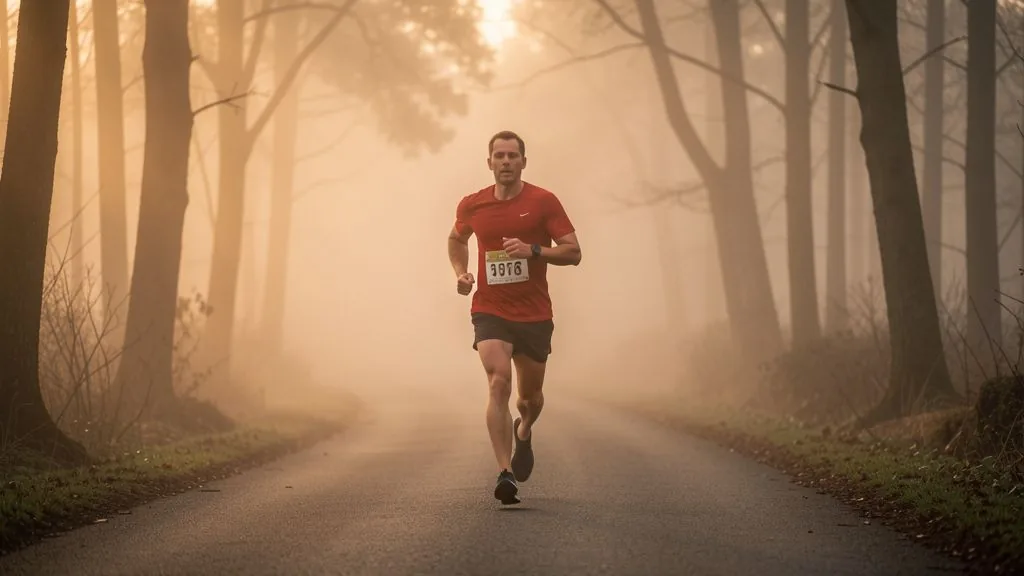
Most runners prepare for sore muscles, side stitches and hitting the wall — and then get stopped by a blister on the heel or raw inner thighs. Foot and skin problems are among the most common reasons a long-distance race ends early. The good news: blisters and chafing are not fate. They follow a mechanical logic, and anyone who understands that logic can prevent most of them.
Why blisters form in the first place
A blister is not a disease, it is a response to repeated shear forces. When the skin is displaced relative to the tissue underneath, tension builds between the skin layers. Do that often enough and the upper and lower skin layers separate, tissue fluid fills the gap — that is the blister. What matters is not downward pressure but horizontal movement: friction alone rarely creates a blister, repeated shearing does.
Three factors amplify the mechanism. First, moisture: softened skin has less resistance and tears under much lower load. Second, heat: every extra degree inside the shoe reduces what the skin tolerates. Third, movement inside the shoe: the more play between foot and insole, the more sliding, the more shear. That is why blisters are usually not a problem of distance but one of fit, moisture and temperature.
The same applies to chafing elsewhere on the body. On inner thighs, armpits, nipples, the neck or under the chest strap, the very same friction occurs — just without a sock in between. Among runners who sweat heavily, chafing is even more common than blisters, because salty sweat irritates the skin on top of the mechanical load.
The four most common spots and what they mean
Where a blister sits tells you a lot about the cause. Anyone who reads the location can remove the trigger.
- Heel: The classic sign of a loose heel counter. The heel lifts on every step and rubs against the back of the shoe. Fix: adjust the lacing — the top eyelets tight, and the heel locked down with the heel-lock lacing technique.
- Toes: A sign of too much room up front or of a shoe size too large. The foot swells during long runs; if it then slides forward it rubs against the toe box. The shoe should leave about a thumb's width in front, no more.
- Inner edge or arch: Usually a too-narrow sole or an insole edge that builds pressure with every step. Worth checking the insole and — if the pattern keeps returning — looking at your gait.
- Inner thighs, armpits, nipples: Friction between skin surfaces or between skin and clothing. Loose, heavy clothing and coarse seams are the main culprits; in rain, wet fabric adds to it.
A special case is a blister under existing callus: it hurts more because it cannot expand outward, and it typically forms where an old pressure spot has already hardened the skin. If you keep getting the same blister in the same place, reconsider the fit of the shoe instead of taping the same patch of skin again and again.
Socks: the most underrated piece of gear
No piece of gear is neglected as often as the sock — and none has a more direct effect on blisters. The rule is simple: no cotton. Cotton soaks up sweat, gets heavy, presses against the foot and keeps moisture exactly where it softens the skin. Technical socks made from polyamide, polyester or merino wool move moisture away from the foot and keep their shape.
Fit matters at least as much as material. The sock has to sit snugly, must not wrinkle and must not have thick seams over friction-prone spots. Socks that are too loose slide inside the shoe and create exactly the shear motion you want to avoid. For anything over about an hour, toe socks with individually wrapped toes are an effective option, because they take friction between toes out of the equation entirely.
- Short runs: a thin, snug technical sock, seam-free at the heel and toes.
- Long runs and heat: a thicker sock with heel cushioning or toe socks, plus dry spare socks in your drop bag.
- Rain: a thin, quick-drying sock instead of thick padding — wet padding is dead weight and it rubs.
- Always: the socks you plan to race in should have been tested on at least one long session. Never wear anything new on race day.
One detail that shows up constantly in practice: socks lose their fit over time. A sock that has gone through fifty washes is stretched out and slides again — and the problem returns even though material and shoe are identical.
Getting shoes and lacing right
A shoe half a size too large is unnoticeable on a short run and disastrous in a marathon. As a rule of thumb: the shoe must hold the heel securely and leave about a thumb's width in front. If the heel is loose, a heel-lock lacing pattern helps — the laces are fed back through the top eyelet, which noticeably improves heel hold.
Lacing also controls pressure on the top of the foot. Lacing that is too tight across the instep causes numbness and pressure pain that can feel like blister pain during a race. If you are between two sizes, choose based on width rather than length: a shoe that squeezes from the sides creates more friction than one that is slightly longer. How to choose shoes systematically is covered in the article on the eight criteria when buying running shoes; for worn-out models, check the right time to replace them.
Prevention: what actually works
The most effective prevention is unspectacular: fit. A shoe that fits, a sock that does not slide and dry skin solve the majority of the problem before it starts. Everything else is a supplement.
- Anti-chafe balm: Vaseline, petroleum jelly or a sports anti-chafe product on inner thighs, armpits, nipples and heel counters. Apply to dry skin, not to skin that is already wet. Use a little more generously in heat and rain.
- Tape and plasters: For known problem spots — a heel that burns on every long run — a blister plaster or thin sports tape is the most reliable solution. Important: apply without wrinkles, otherwise the fold itself becomes the friction.
- Powder: Talcum or zinc powder keeps the foot dry and reduces friction. With very heavy sweating, powder is used up quickly — that is when a balm does more.
- Clothing: Compression or snug, seamless technical clothing instead of loose cotton shirts. In rain, avoid wet, heavy fabric directly against the skin.
- Chest straps and hydration belts: Straps only as tight as necessary; for sensitive skin, line the edge or switch to webbing models with a wide contact surface.
- Toenails and callus: Properly cut nails and regularly smoothed rough callus edges prevent friction from building up on edges.
What does not work: breaking in new shoes "until they fit". A shoe that still presses after 30 kilometres does not get softer — it becomes an injury source. Nor does it help to moisturise the skin before a run: softened skin is exactly what encourages blisters. A quick look at the glossary entries on blister plasters and anti-chafe products is worth it if those terms are otherwise unclear in the shop.
When the blister is already there: proper acute care
The most important rule is the simplest: do not pop it. An intact blister is sterile and heals under its own roof. Popping it opens the barrier to germs and turns a small annoyance into an infection. Only if a blister is so tight that it is unbearable under pressure is an exception justified.
In that case: sterilise a needle (boil it or disinfect with alcohol), pierce at the edge of the blister — not in the middle — press out the fluid, leave the skin roof in place and cover the area with a sterile plaster. No alcohol directly into the open blister, no scissors.
For running: a blister plaster with a hydrocolloid pad is the best immediate fix, because it covers the spot and takes over the friction. For chafing on inner thighs or armpits, a thin anti-chafe film helps — burning skin without a protective layer gets worse with every additional minute, because sweat amplifies the irritation. Redness that fades after the run without pressure and heat is harmless; a red, swollen and warm area that persists for days should be looked at by a doctor.
What to do on race day
In a race only one thing matters: react early. Anyone who treats a blister only when it hurts has already lost pace, rhythm and possibly the goal. That is why the right items belong in your kit bag: two blister plasters, a small sachet of anti-chafe balm, one dry pair of socks.
- Before the start: anti-chafe balm on known problem spots, socks on without wrinkles, check the lacing. For men, nipples are the most commonly underestimated spot — tape them beforehand.
- First sign: burning is a signal, not just an inconvenience. In a race where every minute counts, the 30-second stop to tape up is almost always worth it — a blister costs more.
- In rain: swap wet socks early, reapply balm on wet clothing edges around strap lines.
- After the finish: clean the area, let it air-dry, only then cover it. No rubbing, no alcohol on irritated skin.
Apply this list consistently once on a long run and you will be surprised how often blisters suddenly stop happening. The effort is two minutes of preparation — just like the race day checklist, which is best worked through the evening before, not in the start corral.
Frequently asked questions about blisters and chafing
Should you pop a blister?
No, as long as it is not tight and painful under pressure. Intact skin is the best dressing there is. If draining is unavoidable, use a sterile needle at the edge, disinfect afterwards and cover the area.
Which socks prevent blisters best?
Seamless socks made from polyamide, elastane or merino wool that fit snugly. Cotton is the worst choice because it holds moisture and softens the skin. Over long distances, toe socks with separated toes are worth it.
Does Vaseline help against chafing?
Yes. Vaseline or a sports anti-chafe balm clearly reduces friction on inner thighs, armpits and nipples. Apply it to dry skin before the run, and use a little more in heat or rain.
Why do blisters only appear after 15 kilometres?
Because friction is cumulative. Moisture and heat build up over the duration of the run and the skin softens progressively. From about 60 to 90 minutes, the tolerance of the foot skin drops noticeably.
A plan that covers the details too
Peakora plans not only intensity and volume, but also accounts for heat, long sessions and the accumulated load on your body — so a good plan never becomes a weak point. Start free, no credit card required.
Start free