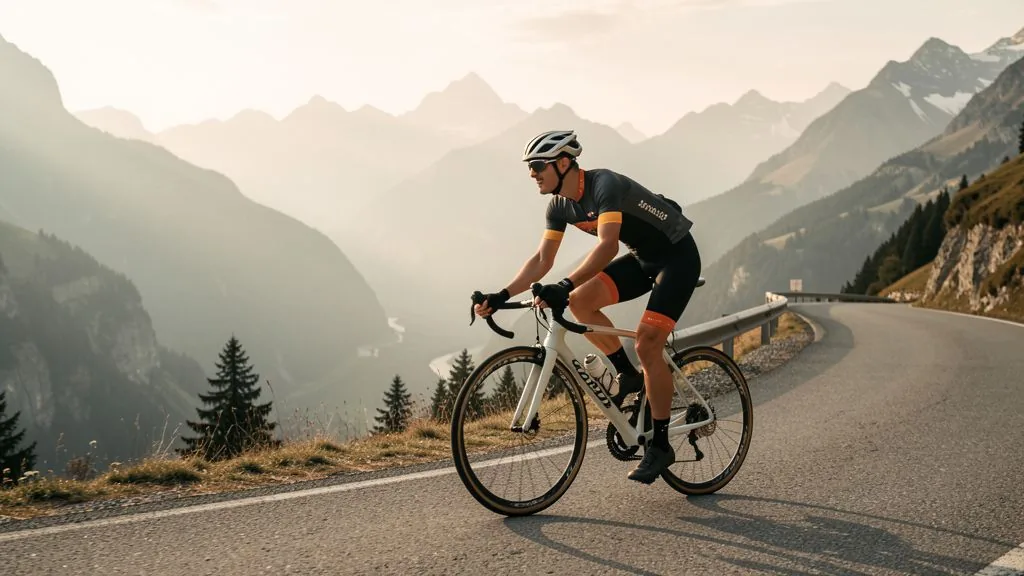
Most road-cycling kilometres are not spent on an empty mountain pass but in ordinary traffic — on rural roads, through towns and on commutes. That is exactly where your safety is decided. Riding safely in traffic is not a matter of luck; it is a bundle of visibility, position, forward-thinking riding and clear communication. Know these four levers and you cut your crash risk sharply — while still riding fast.
Be seen: the single most effective factor
The overwhelming majority of crashes involving cyclists happen because the driver failed to see the rider — not because they were speeding or reckless. Visibility is therefore the strongest single lever you control. Two levels matter: being seen, and seeing for yourself.
- In daylight: Bright clothing — hi-vis yellow, signal orange — multiplies the detection distance compared with dark or muted kit. A flashing rear light, even by day, is feasible on most modern models for a few grams of weight and works far better than its reputation suggests.
- At dusk and in the dark: Front and rear lights are not optional but the law — white to the front, red to the rear. Reflectors on pedals, spokes and in the tyre sidewalls make you recognisable from angles where a lamp does nothing.
- Seeing for yourself: Clean, unscratched glasses and a helmet that does not limit your view are underrated. With a low sun, a contrast-enhancing lens helps more than any precaution at the bars.
What else applies on night rides is covered in detail in the article Night running safety — the principles of visibility, reflection and route choice apply just as much to cyclists.
Lane position: ride visible, not deferential
The most common riding mistake among road cyclists is riding too far right and too close to the edge. It feels humble, but it is dangerous. Glue yourself to the verge and you will barely be seen at blind spots and will invite drivers to overtake without clearance — often when there is no room.
- At least one metre of clearance from the verge, the shoulder or parked vehicles. That keeps you out of the door zone — the reach of a suddenly opened car door.
- Past a line of parked cars: ride far enough left that you are clear of the door zone, tracking the left edge of the parking lane.
- Single-lane road: here you may use the full lane wherever there is no room for a safe overtake. A narrow road with oncoming traffic means overtaking is impossible, so ride centrally so drivers are not even tempted.
- Mandatory cycle path: where a usable cycle path exists, you must use it in Austria. It is unusable, for example, at roadworks, in snow, with broken glass or a poor surface — then you may move onto the carriageway.
Communicate: hand signals and eye contact
Safety in traffic is a negotiation — and communication only works if both sides understand it. Do not expect drivers to guess your intention.
- Signal with your hands: clearly indicate turns left and right. Change lane without signalling and you will be missed or cut off.
- Make eye contact: at junctions and side roads, look the driver directly in the face. Only when eye contact is made have they truly seen you.
- Anticipate: always assume the other driver has not seen you. Brake lights, front wheels and the way a car is driven tell you what is likely to happen next.
- Position firmly: when in doubt, sitting centrally in the lane means you are not overlooked. Hanging timidly at the edge invites others to overtake carelessly.
The most dangerous situations — and how to defuse them
A small number of situations account for most serious cycling crashes. Know them and you can counter them directly.
- The right-turning lorry or bus: the most lethal configuration of all. A lorry turns right while the cyclist rides straight on alongside it — inside the blind spot. Rule: never stand to the right of a large vehicle at a junction. Stop behind it or wait.
- The right-turner with no indicator: cars also often turn right without signalling and cut across the cycle lane. Watch the wheels turning and the forward motion of the vehicle — not the indicator.
- Exits from driveways and car parks: drivers pulling out look to the left, not the right — exactly where you are coming from. Expect the car that shoots through the gap.
- Opening car doors: the dooring crash. The remedy is clearance: at least one metre from a row of parked cars, more where there is room. Never ride tight along parked cars.
- Overtaking vehicles on a narrow road: drivers misjudge the width of their own vehicle and the lateral gap when overtaking. Ride defensively, do not let yourself be squeezed into the ditch, and use the centre of the lane when traffic is oncoming.
- Junctions with rails and wet road markings: tram rails, cobbles and wet road paint are the most common cause of falls in the rain. Cross rails as close to a right angle as you can, and never brake hard on wet markings.
Safety equipment — what actually helps
- Helmet: there is no general adult helmet law in Austria, but the head is the worst injury risk in any fall. A well-fitting helmet does more than any other piece of kit. After a crash with head impact, the helmet must be replaced.
- Gloves: in a fall you instinctively put your hands out. Cycling gloves prevent the typical grazes and protect the wrist.
- Lights and reflectors: front light, rear light and the required reflectors — make sure the batteries are charged before you head out into dusk.
- Mirror (optional): a mirror on the bars or helmet lets you watch traffic behind without turning your head — a real gain when changing lanes on busy roads.
- Emergency card: ID, emergency contact and blood group in the jersey pocket or on a wristband. In a real emergency that is worth more than a spare inner tube.
Plan the route in advance
The safest ride is the one on quiet roads. Before trying a new route, take a look at it: B-roads and country lanes often carry a fraction of the traffic and give you more room without costing a detour. Many cycling apps offer a mode that prefers minor roads — riding main roads regularly raises your risk needlessly. A clean route is therefore part of the safety chain. How to pick sensible loops is described in the article Running route planning — the principles of avoiding traffic and building in safety carry over to the bike.
For structured rides with defined goals, it is also worth looking at the cycling training page, where building fitness and race preparation come together.
In the rain and in the dark
Two conditions change the safety picture markedly: darkness and wet. The first cuts sight distance, the second lengthens braking and reduces grip. At dusk and in the dark you need reliable lighting, reflectors and bright clothing. In the rain, extend your gaps, brake early and gently, and expect slipperiness on road markings, rails and drain covers. Never brake hard in a corner on a slippery surface — upright and steady through the turn is almost always safer than braking late.
Common mistakes
- Riding too far right: the classic road-cyclist error. It feels safe; it is not. Your clearance from the edge is your protection against dooring and close passes.
- Trusting the indicator: indicators lie. Watch vehicle movement and wheels.
- Underestimating the blind spot: standing beside a lorry or bus at a junction is deadly. Never.
- Setting off into dusk without lights: a short climb, a detour — suddenly it is dark. Lights should be charged and mounted before every ride.
- Confusing defensive riding with courage: riding safely does not mean riding slowly, but riding with foresight and visibility. Fast and safe are not opposites — reckless and safe are.
- Neglecting low-traffic routes: five extra minutes on a side road can spare you a lifetime of crash risk.
How Peakora supports safe training
Safety starts with planning. In Peakora, route profile, training goal and recovery feed into a plan that does not push you into risky efforts — no heroics, no overload, no forced maximum efforts as fatigue sets in. The recovery monitor shows you when rest is due, so you ride focused and alert. A tired, drained rider misses more and brakes later — recovery is therefore part of road safety. How the various load metrics fit together is explained in the Peakora lexicon.
Frequently asked questions about road safety
Do I have to use the cycle path in traffic?
In Austria, yes — where a usable cycle path exists. If it is unusable, for example through snow, roadworks or a poor surface, you may move onto the carriageway. On the road you ride on the right, but with at least one metre of clearance from the edge.
How far left may I ride as a cyclist?
Far enough that you are safe and seen: around one metre from the verge or from parked cars. Too far right invites drivers to overtake without clearance, and the door zone becomes dangerous.
What should I do when a lorry turns right?
Never ride up the right side of a lorry or bus into a junction. Stop behind the vehicle or wait until it has turned — the blind spot along the right side of a large vehicle is deadly.
When am I visible enough as a cyclist?
In the dark or poor visibility you need front and rear lights plus reflectors on pedals, spokes and tyres. In daylight, bright clothing and a flashing rear light help — visibility is the single most effective safety factor.
Plan your cycling training with Peakora
Structured sessions, route profile and a recovery monitor — so you train focused and safe. Start free, no credit card required.
Start free