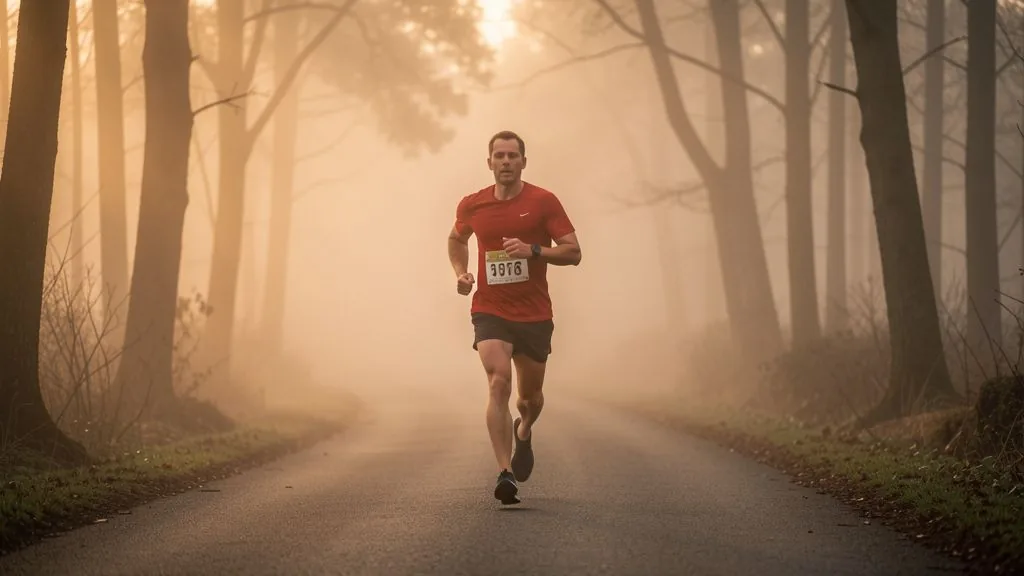
Caffeine is the most thoroughly researched legal performance aid in endurance sport: more than 300 studies document a performance gain of roughly 2–4 percent — in a sub-three-hour marathon, that is three to six minutes. Yet most recreational athletes use caffeine the wrong way: too little, badly timed, or on the wrong days. This guide shows what the research actually says about dosing, timing and side effects.
Why caffeine improves endurance performance
The main mechanism sits in the brain, not the muscle: caffeine blocks adenosine receptors. Adenosine accumulates in the nervous system during exertion and signals fatigue — the more of it docks, the heavier the pace feels. Caffeine occupies the receptors without activating them. The result: perceived exertion (RPE, Rating of Perceived Exertion) drops measurably at the same pace, typically by 5–6 %.
That is exactly why caffeine works so broadly: meta-analyses show improvements in time-trial performance lasting 20 to 90 minutes, in interval-type efforts and even in strength endurance. The older theory that caffeine spares glycogen through increased fat burning is now considered debunked — the effect is primarily on the central nervous system. One more note: caffeine has been off the WADA prohibited list since 2004, though it remains part of the monitoring program.
The right dosage: 3–6 mg per kilogram
The evidence-based target zone is 3–6 mg of caffeine per kilogram of body weight. For a 70 kg athlete, that is 210–420 mg. The dose-response curve flattens above 6 mg/kg: more caffeine adds no benefit but clearly raises the risk of trembling, a racing heart and gastrointestinal problems. Doses below 3 mg/kg (e.g. 2 mg/kg) already work for many athletes — a good starting point for the caffeine-sensitive.
- Espresso (30 ml): 60–80 mg of caffeine — depending on roast and extraction.
- Filter coffee (200 ml): 80–120 mg, with wide variation by bean type and brewing time.
- Energy gel with caffeine: usually 25–50 mg per gel — check the packaging.
- Caffeine tablet: standardised at 100 or 200 mg — the most precise source.
- Energy drink (250 ml): 80 mg, plus sugar that is not always welcome during exercise.
For a precise race-day protocol, tablets or caffeinated gels are the better choice because the dose is reproducible. Coffee works just as well in principle — studies using coffee as the source show comparable effects — but you never know exactly how much was in the cup.
Timing before the start: 60 minutes is the standard
Blood caffeine levels peak about 45–60 minutes after ingestion. The classic recommendation is therefore: full dose 60 minutes before the start. Athletes who begin at race pace (5K, 10K, sprint triathlon) benefit most from this variant, because the effect lands exactly in the peak load window.
The half-life averages 4–6 hours — the effect easily lasts beyond a marathon. For short lead times there is a faster alternative: caffeinated gum is absorbed through the oral mucosa and works within roughly 10 minutes. Handy when the start is delayed or you are called to the line at short notice in a time trial.
Caffeine during the race: the late-race effect
In long-distance events of two hours or more, many athletes add small caffeine doses during the race — typically 1–1.5 mg/kg spread across the final third. The reason: precisely when glycogen stores run low and fatigue rises, caffeine lowers perceived exertion most noticeably. Studies on late ingestion show that even athletes who took caffeine before the start benefit from a repeat dose.
In the marathon, the protocol "gel with 50 mg of caffeine at kilometres 25 and 32" has proven itself — always combined with the regular carbohydrate intake from your marathon fueling plan. Caffeine does not replace carbohydrates: it makes fatigue more bearable but does not refill a single store. If you rely on caffeine alone and neglect fueling, you will still hit the famous wall — read why the bonk happens in the linked article.
So test your complete caffeine protocol in at least two long training sessions. There are no experiments on race day — especially not with a substance that can irritate the stomach.
Habituation, genetics and the washout myth
Three factors determine how strongly you respond to caffeine:
- Habitual intake: If you drink several cups of coffee a day, you build some tolerance — the effect is somewhat weaker but does not disappear. Heavy coffee drinkers still benefit measurably in competition.
- Genetics: The enzyme CYP1A2 breaks down caffeine. Fast metabolisers (AA genotype) feel the performance effect clearly; slow metabolisers (CC genotype) sometimes not at all or even negatively. If an evening coffee keeps you awake for hours, you probably belong to the slow group — keep the dose low and take it early in the day.
- Washout: The idea of going caffeine-free for a few days before racing to "reset" the effect is popular — but the data behind it are weak. Studies show no consistent benefit from a 2–4 day abstinence, while the downsides are real: withdrawal headaches and fatigue right in race week. Recommendation: keep your habitual intake and time the race-day dose precisely.
Side effects and sleep: the honest flip side
Caffeine is safe, but not free of side effects. The relevant points for endurance athletes:
- Sleep: A half-life of 4–6 hours means a double espresso at 4 pm is still half active at 10 pm. Since sleep is the strongest recovery factor, caffeine at the wrong time can cost more performance than it delivers. Rule of thumb: last dose at least 8 hours before bedtime; for evening races, skip it or reduce to 1–2 mg/kg.
- Gut: Caffeine stimulates bowel activity — a real issue mid-race. Test the protocol in training; sensitive stomachs do better with tablets instead of coffee and gels instead of energy drinks.
- Heart rate and jitters: Caffeine slightly raises resting heart rate and can trigger trembling and inner restlessness — athletes who are already nervous at the start line should not overshoot the dose.
- Dehydration myth: Moderate caffeine intake does not measurably increase fluid loss during training. Sweat rate and thirst remain the steering variables for drinking — details in the article on hydration for runners.
Practice protocol: caffeine on race day
A concrete example for a 70 kg marathon runner targeting around 3:30 hours:
- Start minus 60 minutes: 210 mg of caffeine (3 mg/kg) as a tablet or two espressos — together with the usual race breakfast, nothing new.
- Kilometre 25: gel with 50 mg of caffeine plus 25–30 g of carbohydrates.
- Kilometre 32: second caffeinated gel (50 mg), again with carbohydrates.
- After the finish: no further caffeine if the race started in the afternoon — the following night's sleep is part of recovery.
Total: about 310 mg — within the safe daily amount of 400 mg that EFSA specifies for healthy adults. For 10K races or sprint distances the start dose alone is enough; in ultra events, small doses (50–100 mg) are taken hourly during the final third of the race.
How Peakora supports you
Caffeine is only one building block — it becomes effective within the overall system of training, fueling and recovery. Peakora's fueling calculator sets your carbohydrate and fluid targets for race and training days, and your caffeine protocol simply belongs in your session notes — so you test it systematically in your long runs instead of improvising on race day. In parallel, the recovery monitor tracks your form and readiness: if an evening race with caffeine cost you sleep, you see it in the data the next morning and can schedule the next hard session accordingly.
Frequently asked questions about caffeine in endurance sports
How much caffeine before training is optimal?
The optimal dose is 3–6 mg of caffeine per kilogram of body weight, taken about 60 minutes before the start. For a 70 kg athlete that is 210–420 mg. Doses above 6 mg/kg add no performance benefit, only more side effects such as a racing heart and stomach problems.
Do I need to stop caffeine before a race?
No. A 2–4 day caffeine washout before racing shows no reliable extra benefit in current research. Even habitual coffee drinkers benefit from the race-day dose, although the effect may be slightly blunted.
Does caffeine dehydrate you during exercise?
No. Moderate caffeine intake up to about 400 mg does not measurably increase fluid loss during training. The dehydration myth is considered debunked in athletes — thirst and sweat rate remain the key drivers of how much you should drink.
Is coffee as effective as caffeine tablets?
In principle yes, because the active ingredient is identical. Tablets and gels are easier to dose precisely, though: the caffeine content of coffee varies between roughly 60 and 120 mg per cup depending on beans and brewing — too imprecise for an exact race-day protocol.
Plan training, fueling and recovery with Peakora
AI training plan with fueling calculator and recovery monitor — so details like your caffeine protocol fall into place. Start free, no credit card required.
Start for free