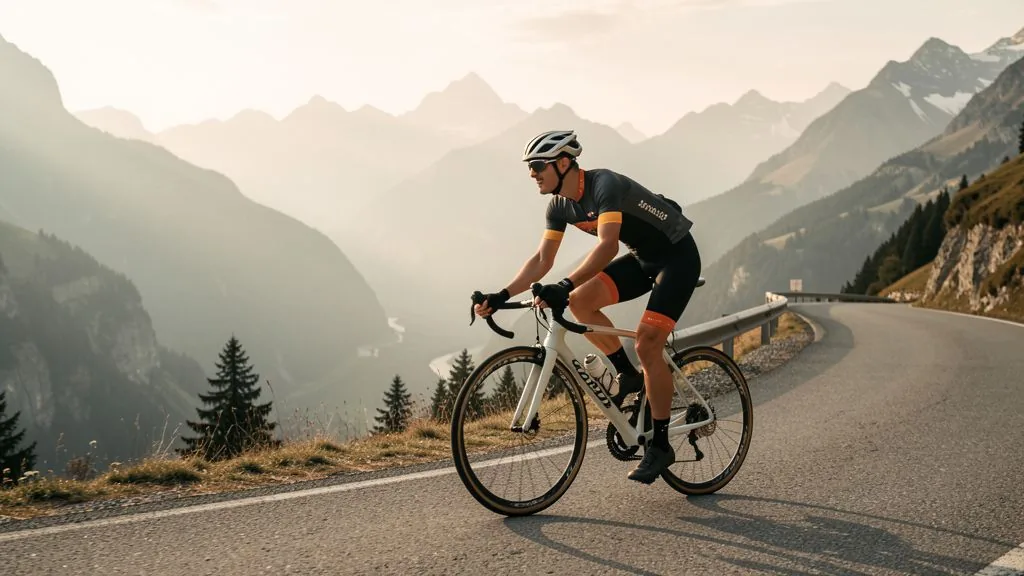
A bike race is rarely decided by endurance — it is decided by ten seconds. Whoever still has power on the finishing straight and puts it cleanly onto the road wins the sprint; whoever loses three bike lengths in the slipstream loses the race. Sprint training — the targeted stimulus for five to twenty seconds — is therefore not a pro topic but the last building block that almost every amateur neglects.
Why sprints decide the race, not base fitness
Endurance gets you to the point where the sprint begins. From there, the outcome depends on peak power and how quickly it fades. A trained amateur produces 900 to 1,100 watts in the first seconds of a sprint, a professional over 1,500. The difference sounds huge, but what counts is less the absolute peak than your power after ten seconds: someone who holds 1,000 watts for two seconds and then drops to 600 loses against a rider who holds 900 watts steadily for ten seconds.
Physiologically, a sprint is a purely neuromuscular stimulus: maximally recruited muscle fibres, high force over a short time, little lactate accumulation when the execution is clean. That is exactly why you cannot train it through volume — three hours of base riding will not make you faster in a sprint, but twelve clean repetitions a week will.
The technique of a sprint
A good sprint looks effortless and is in fact a sequence of precise movements. Four points make the difference:
- The gear: Sprinting calls for a noticeably bigger gear than your endurance pace. Too light means torque is missing and you "flutter" on an empty crank instead of putting pressure on the pedal. Anyone spinning at 120 rpm in a sprint trades force for speed.
- The position: Short surges up to ten seconds are ridden out of the saddle, because you then use your arms and trunk as an extra power source. Longer sprints (15 to 20 seconds) are more efficient seated, with a brief standing phase to accelerate at the start.
- The line: A sprint goes straight. Anyone who rocks the bars after the surge loses speed and endangers themselves and others. The upper body stays quiet; the movement comes from hips and legs.
- The cadence: Aim for 90 to 95 rpm at the start of the sprint and lift toward 110 at the end. Blasting off at 120 rpm gives away the torque for the first metres — and that is exactly where the decisive bike lengths are formed.
How a sprint works physiologically
A sprint over five to twenty seconds is fuelled by the energy-rich phosphates and the anaerobic glycolysis pathway. The phosphate system supplies almost all the energy for two to ten seconds, after which glycolysis kicks in and produces lactate. For training this means something important: you recover from a sprint almost completely within three to five minutes of easy rolling — the stimulus is neuromuscular, not cardiovascular.
Why that matters: because the fatigue clears quickly, you can fit twelve sprints into one session without wrecking your base. Unlike threshold intervals, short sprints leave no deep state of exhaustion but sharpen strength and technique. Under high load, an uneven pedal stroke is the difference between the rider who wins the sprint and the one hanging two bike lengths back in the slipstream. How such a stimulus fits into your load curve is described by the logic of Training Stress Score.
Five training formats for the sprint
Sprints are trained in clear, repeatable formats. Ideally on a quiet, straight road or on the trainer:
- Kick start (sprint from a slow roll): Ten repetitions of 10 to 15 seconds from about 20 km/h and a small gear. Roll four minutes very easy between repetitions.
- Gearing sprint: Six to eight surges of 8 seconds each in three different gears (light, medium, heavy) to find your optimal sprint gear — each stimulus fully rested.
- Lead-out simulator: Two to three times: three minutes at brisk base pace, then a four-second sprint, then five minutes easy. Trains the sprint out of pre-fatigue, as it happens in a race.
- Cadence sprint: Four times 15 seconds sprinting out of a spin-up at 110 and 130 rpm in a small gear. Improves leg speed.
- Trainer surges: On the indoor trainer, ten times 8 seconds in a heavy gear. Very time-efficient, avoids traffic and trains the roundness of the pedal stroke.
One point is the same in every format: clean technique comes before maximum effort. As soon as you can no longer turn the pedals in a controlled, round way after the surge, but instead cramp up, the repetition is over. Strength training for cyclists also provides valuable foundations for maximum force at the pedal.
Dosing sprints correctly
Sprints are a sharp tool that only works on fresh legs. Once or twice a week is enough, and the session belongs at the start of the week, not behind three hard days. After a sprint day you need 48 hours of easy riding before the next intense stimulus — the neuromuscular system recovers more slowly than the cardiovascular one.
Embedding them in an easy base ride has proven effective: after 40 to 60 minutes of easy rolling come the sprints, then you roll 20 minutes to cool down. The total load stays in the green zone and the sprint stimulus still lands. In the race phase, reduce to one maintenance session a week with six sprints — more harms your freshness on race day. How these stimuli fit into your form curve (CTL/ATL/TSB) is shown in the article on CTL, ATL and TSB.
Five common sprint training mistakes
- Gear too light. The classic: people spin too small in a sprint, the crank turns empty and the force never reaches the road. One to two gears harder than your endurance pace.
- Legs too tired. Sprints after three hard days bring nothing but exhaustion. The stimulus needs freshness — better one repetition less than one on empty legs.
- Too much volume. Squeezing sprints into a long ride while racking up 200 kilometres loses the quality of the repetitions. Short, sharp, done.
- Uneven pedal stroke. A sprint exposes every technical weakness. Anyone who wobbles seated will wobble even more in a sprint — base work on pedal technique pays off first.
- Never from pre-fatigue. In a race the sprint always comes after two hours of race pace, never from a standstill. If you only train fresh, you will be surprised in a race by how hard the sprint really falls.
Using sprints in a race
In competition a sprint is a tactical tool. Whoever launches the decisive attack should do it from the slipstream, not from the wind — the sprint costs less if you saved the recovery beforehand. On the finishing straight, position counts: jump out of the wheel in front of you and set the sprint for the last 100 to 150 metres, not earlier. Whoever goes too early dies before the line.
Just as important as sprinting is anticipating: short steep ramps and road corners are where races split. Anyone who can put in a clean surge there needs less endurance for the same gap. Cycling is tactics and timing, and sprint training brings you to the point where you can actually pay for both.
How Peakora plans your sprints
In the Peakora engine, sprint stimuli are firmly anchored in periodisation: in the build phase they appear as short, sharp sessions after easy days, while in the race phase the system reduces them to maintenance stimuli so your freshness on race day is not compromised. Because the recovery monitor tracks your form (TSB) in parallel, you see in black and white whether your legs are even ready for a sprint stimulus — or whether an easy day is the better choice today. That turns "sprint training someday" into a fixed part of your plan.
Frequently asked questions about sprint training
How many watts does a sprint produce?
Trained amateurs often peak at 900 to 1,100 watts in the first seconds of a sprint, while professionals exceed 1,500. What matters is not only the peak but how high your power still is after ten seconds — that is where the sprint is decided.
How often should I train sprints?
Once or twice a week is enough. Sprints are a neuromuscular stimulus that only works on fresh legs. After a sprint day you need 48 hours of easy riding before the next hard stimulus.
Out of the saddle or seated for sprinting?
Short surges up to ten seconds are ridden out of the saddle, because you then use your arms and trunk as an extra power source. Sprints over 15 to 20 seconds are more efficient seated, with brief standing phases at the start.
Why am I so slow in a sprint?
Usually it is not base fitness but technique and gearing. Too light a gear, going too early and an uneven pedal stroke cost more than missing strength. Twelve clean sprint repetitions a week do more than extra base miles.
Plan your cycling training with Peakora
Sprint stimuli, strength training and periodisation automatically matched to your race. Start for free, no credit card required.
Start for free