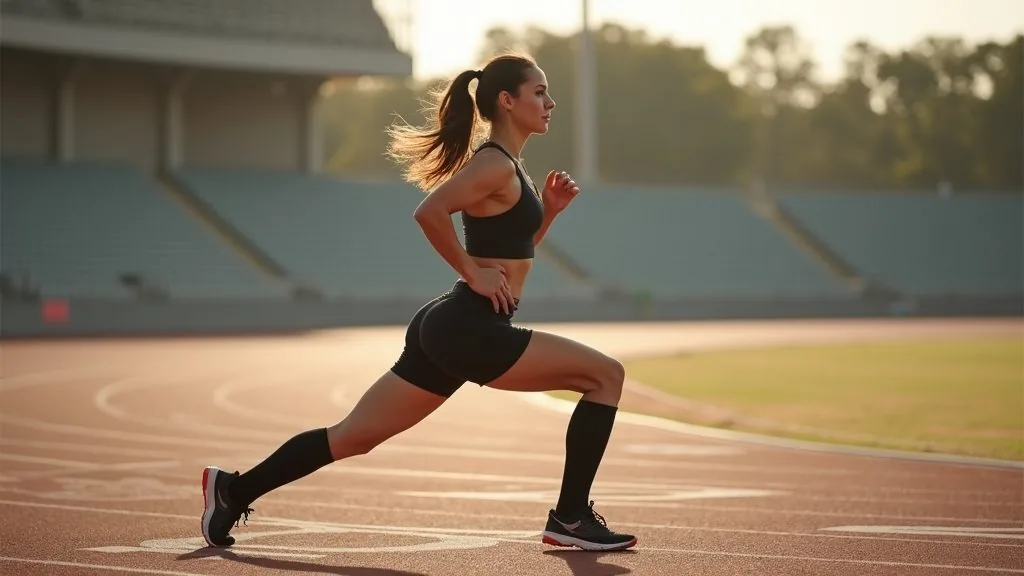
The gluteus maximus is the strongest muscle in your body — and when you run, it is often the one doing the least work. A life spent in a chair shortens the hip flexors, weakens hip extension and teaches your nervous system to ignore the glutes. Gluteal amnesia is the name for that pattern, and it sits behind a large share of hip, knee and back pain in runners. Technically it is not a diagnosis but a functional problem — explainable, testable and trainable.
What gluteal amnesia actually means
The term describes reduced and delayed activation of the gluteal muscles, above all the gluteus maximus and medius. The cause is rarely a single event but a pattern: many hours of sitting per day, little hip extension movement, and a training routine that points straight ahead. In movement science this is a neuromuscular redistribution problem — the brain prefers other muscles for hip extension because they are available faster.
The consequences are concrete. If the glutes are not active in time, the hamstrings, calves, lower back and outer hip take over part of their job. They were not built for that: overload of the hamstrings and Achilles tendon, tension in the back and a knee that collapses inwards are the typical chain reaction. Despite the name, the muscle is not paralysed — it is functionally decoupled. That is exactly why merely "thinking about it" does not fix the pattern; load and repetition do.
What the gluteus maximus actually does when you run
Anyone who reduces the job to "hip extension" underestimates it. The gluteus maximus works in three roles at once in every running cycle:
- Hip extension: In push-off it is the main engine. It accelerates your body weight forward — on every step, and at 180 steps per minute that means constantly.
- Pelvic stability: Together with the gluteus medius it stops the pelvis dropping towards the swing leg. Without it the hip sinks in single-leg stance, the knee rotates inwards and the spine has to compensate.
- Anti-rotation: It brakes the rotation of the trunk against the pelvis. The faster you run, the more this matters.
The gluteus maximus peaks not in push-off — as is often claimed — but at the end of the swing phase and just before foot contact. In other words, it stabilises the moment your body catches the next step. This is exactly where the difference shows between a runner who lands softly and moves forward efficiently and one who destroys energy with every step. How trunk and hip work together is covered in core training for endurance athletes.
Why runners are especially affected
Running is a hip-extending sport — in theory. In practice many runners show a pattern on video known as hip thrusting: the hip is not extended backwards, but the movement comes from the knee and ankle. The trunk stays slightly behind the hip, the pelvis rotates forward quickly, and the gluteus maximus never reaches full contraction. The result is less propulsion per step — roughly two to five percent, depending on foot strike.
The second cause is sitting. After several hours a day in 90 degrees of hip flexion, the gluteus maximus is lengthened and passive while the hip flexor is shortened. Runners know the effect from office days: the first kilometre feels stiff and the hip only falls into place in the later kilometres. As a rule, blood flow and activation come with intensity. In short, hard intervals glute activation is massively higher than in an easy distance run — which is why effort often feels easier to weak runners than easy pace does. Why base runs are nevertheless the foundation is explained in base training.
The most common knock-on problems
When the glutes do not stabilise, the body hunts for substitute strategies — with visible consequences:
- Runner's knee (ITBS): Without stable hip abduction the knee collapses inwards during landing and pressure on the outside rises. A very common trigger.
- Hip pain: The gluteus medius tendon at the greater trochanter can become irritated, typically in runners who train a lot on uneven ground.
- Hamstring problems: The back of the thigh compensates, fatigues earlier and is more prone to strains during the swing phase.
- Back pain: The lower back takes on stabilisation that the glutes should deliver — often felt as a dull ache after long runs.
- Achilles and heel: If hip extension is weak, ground contact time lengthens, the calves work harder and the tendon is loaded more.
Important: these complaints can have many causes. The gluteal muscles are one of them — usually an underestimated one — but not automatically the only one. Persistent pain needs a physiotherapy assessment, not a blog post. A systematic overview is in injury prevention: the five most common running injuries.
How to test it
Three simple tests you can run without equipment:
- Single-leg stance at a wall: Stand on one leg with the other leg in front. If the pelvis drops towards the swing leg within 30 seconds, or you drift towards the wall, hip abduction is weak. Hold the pelvis level for 30 to 60 seconds without compensating.
- Bridge with attention test: From lying, extend the hip and notice where you feel the effort. If it is mainly in the lower back rather than the glutes, that is a classic sign of delayed glute activation.
- Single-leg hop stability: Ten single-leg hops forwards and backwards. If the knee collapses inwards, the trunk wobbles a lot or the body axis cannot be held, hip control is missing.
A positive test is not a verdict but a starting point: it shows that targeted strength work will pay off. As with strength training for runners generally, it is not about an activation feeling but about real load.
What actually works: strength, not activation magic
Most runners' first reflex is a programme of glute bridges and clamshells before a run. These exercises have their place — but they are too easy to build real strength. Muscle growth needs progressive load, and the glutes are so strong that bodyweight routines under-challenge them quickly. The most effective approach is therefore a small selection of hard, loaded exercises, two to three times a week:
- Hip thrust: Shoulders on a bench, barbell or dumbbell across the hips. Three sets of eight to twelve reps. This exercise allows the highest load on the gluteus maximus and is therefore number one.
- Romanian deadlift: Hip extension with a slight knee bend, three sets of six to ten reps. Trains glutes and hamstrings together — exactly the chain that works in running.
- Step-up onto a high box: Raises the demand on hip stability and single-leg strength, three sets of eight to twelve reps per side. Close to the running pattern, highly transferable.
- Single-leg bridge with feet elevated: A bodyweight regression of the hip thrust, good for starting out and as a finisher in two to three sets per side.
- Lateral abduction work: Cable or resistance band, two to three sets. Directly targets the gluteus medius and pelvic stability.
To start, a combination of one heavy main lift plus one single-leg exercise twice a week, twelve to twenty minutes each, is enough. More important than exercise variety is progression: if you hold the same load for the same reps over weeks, nothing happens. The same principle applies to strength training for runners in general — more in strength training for runners.
How to fit it into your training week
Glute work does not belong at the end of a long, tired week, but on a day with enough distance from hard running quality. This rhythm has proven itself:
- After an easy run or on a separate day — two strength stimuli per week, at least 24 hours before the next hard run session.
- Not the day before the long run: after heavy strength work endurance performance is temporarily reduced and recovery takes 24 to 48 hours.
- Shortly before a run: five minutes of dynamic activation — hip flexor mobilisation, lunges, lateral bands — to get hip extension going for the session. That is the warm-up component, not the training.
The noticeable effect arrives with six to twelve weeks of consistent work. And it is measurable: better pelvic position on video analysis, less knee collapse in the single-leg stability test, less lower-back ache after long runs. A training plan that spreads endurance and strength stimuli cleanly across the week makes the build easier to control — which is exactly what the Peakora engine does via the load curve and recovery windows.
Common mistakes
- Activation without load: bodyweight bridges and bands are sold as a cure-all but become too easy fast. Without progressive load, strength stays the same.
- Tension instead of extension: in the hip thrust the force comes at the end of the movement — anyone who merely heaves upwards and does not fully extend the hip at the top loses the exact stimulus.
- Two legs instead of one: running happens on one leg. Without single-leg work the stabilising pattern stays untrained.
- Strength work only after injury: it works best as prevention, not as rehab. Starting before is cheaper than having to stop.
- Giving up too early: six weeks is the minimum before you can really judge the effect.
And one note on context: the glutes are strong but not a substitute for load management. A training model with growing volume still needs clean load control — see hip pain when running for how the chain reacts, and foot strength for runners for the other end of that chain.
Frequently asked questions about gluteal amnesia
What is gluteal amnesia in runners?
Gluteal amnesia describes reduced activation and strength in the gluteal muscles, usually caused by long hours of sitting and a lack of hip extension. When running, the hamstrings, calves and lower back then take over part of the work — which shows up as hip, knee and back pain.
Do activation exercises before a run help?
In the short term yes, they can wake the glutes up for that session. They do not solve the problem on their own. What matters is progressive strength — loaded hip extension at least twice a week for several weeks.
How often should runners train their glutes?
Twice a week is enough for most runners. The key is load: three to four sets with meaningful resistance, progressed over weeks. Light activation drills alone are far too easy to build real strength.
Can weak glutes cause runner's knee?
Yes, they are a common contributor. Without stable hip abduction the pelvis drops on every step, the knee collapses inwards and pressure on the kneecap rises. That exact pattern is typical of runner's knee and ITB syndrome.
Strength and endurance, properly scheduled
Peakora spreads running and strength stimuli across your week, tracks the load and adapts the plan to your actual recovery. Start for free, no credit card required.
Start for free