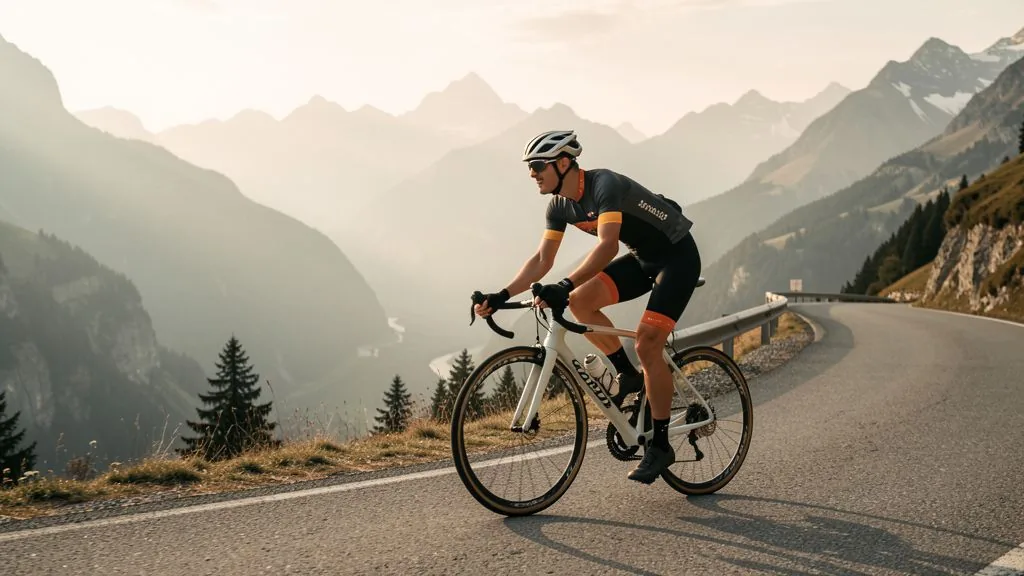
The most common question before any autumn ride is not which session is on the plan — it is what to wear. Dress too warm and you sweat through the first hour and freeze afterwards; dress too cold and the ride becomes a misery. Yet two simple rules get it right almost every time: the 10-degree rule and the three-layer system. This article shows how to dress from 25 °C down to freezing — and why cycling makes different demands than running.
The 10-degree rule
The cyclist's rule of thumb is: dress as if it were 10 °C warmer than it actually is. If the thermometer reads 12 °C, pick the kit you would wear walking at around 22 °C. The reason is the windchill: on the bike the air cools your body at a speed you never reach on foot. At 30 km/h the windchill feels roughly 8 to 12 °C colder — and more again into a headwind or on a descent.
The second half of the rule concerns the first minutes of the ride: you should feel slightly chilly for the first ten minutes. Anyone who is toasty the moment they set off will overheat after twenty minutes and cannot shed layers, because cycling jerseys have no backpack. A cool start is not a mistake — it is the confirmation that your layer choice is right.
The three-layer system
Instead of one thick jacket you wear three thin layers you can adapt individually. That adaptability is the decisive advantage — because load on the bike fluctuates sharply: you ride a climb hard and then coast down a wind-chilled descent.
- Base layer (skin): A moisture-wicking undervest in polyester or polyamide with capillary action. Cotton is the worst choice — it soaks sweat, becomes heavy and cools the body on every descent. Merino is an expensive but excellent cold-day alternative.
- Insulating layer (mid): A thin long-sleeve jersey, arm warmers or a light softshell. It holds warmth but lets moisture through — a windproof membrane here would trap sweat.
- Shell layer (outer): Wind vest, rain jacket or a vented wind jacket. It shields the front of the body, where the wind hits first. The vest folds small into a jersey pocket — indispensable for descents and sudden temperature drops.
For 30 to 40 euros you get a wind vest that keeps you warm on almost every ride — it is a cyclist's most useful garment and replaces a full jacket on short spins.
Temperature table: what to wear and when
The table below is a starting point — it assumes dry conditions and moderate effort. You have to individualise it for your own cold tolerance and intensity: interval riders need one layer less than on an easy base ride.
- Above 22 °C: Short-sleeve jersey and shorts, thin socks. Sun protection for neck and shoulders — on the bike the sun hits you at a flatter angle than when walking.
- 15–22 °C: Shorts, but with thin arm warmers and a wind vest in your pocket. Ideal for the shoulder seasons, since both layers stow in the jersey pocket.
- 10–15 °C: Shorts with knee warmers, long-sleeve jersey or arm warmers and thin gloves. The first tier where hands and knees really need protection.
- 5–10 °C: Long tights, long-sleeve jersey, wind vest or light jacket and thin gloves. Knee warmers can give way to light overshorts that keep off rain and road spray.
- 0–5 °C: Thermal jersey, winter tights or softshell legwear, winter gloves, a cap under the helmet and shoe covers.
- Below 0 °C: Full winter kit as at 0–5 °C plus face protection (buff), overshoes and an extra insulating layer on the torso. Watch for black ice — at these temperatures, route choice matters more than clothing.
Hands, feet and head: the cold extremities
Extremities cool first on the bike because they get little blood flow and the wind hits them unprotected. So below roughly 12 °C, gloves belong on your hands. A thin, windproof glove protects better than a thick insulated one that traps sweat and costs you dexterity on the brake levers.
At the feet it is less the sock than the shoe that matters: cycling shoes are mostly airy, which is why overshoes are the single most effective lever against cold feet below 10 °C. Ski socks are counterproductive — too thick, the shoe fits too tight and circulation gets worse. A thin merino sock plus an overshoe beats three thick socks.
Under the helmet you need a cap or headband covering the ears in the cold. A buff wraps flexibly around neck, face and throat and protects against the wind. For the eyes a clear or tinted lens helps — not only against sun, but against draughts and insects on fast descents.
Rain, wind and visibility
In the rain, breathability matters more than waterproofing. A fully waterproof but unvented jacket works like a pressure cooker: you sweat so hard from inside that you end up wetter than without a jacket. A rain jacket with vent zips, or a combination of wind vest and shoulder rain protection, is the more practical answer.
- Visibility: Reflectors beat colour. Neon without reflective surface does almost nothing in headlights. Moving reflectors on arms, legs and pedals catch the eye best, topped up with a small rear body light.
- Rain cap: Under the helmet it keeps water off your glasses and face and stops rain running down your neck.
- Overshorts: On long rain rides they protect thighs and knees from chilling — wet plus wind costs more warmth than wet alone.
Common mistakes when dressing on the bike
- Cotton against the skin. It soaks sweat, becomes heavy, dries slowly and chills you in the wind. Technical fibres with capillary action are essential.
- Dressed too warm. The more common mistake than too cold — start sweaty and you freeze all the more on the descent. Take one layer less and keep a spare in the jersey pocket.
- Forgetting gloves and overshoes. Hands and feet decide your comfort in the cold. Gloves from 12 °C, overshoes from 10 °C.
- Testing new kit in a race. Every layer that chafes or feels different belongs in a training ride first — not in a gran fondo.
- No ventilation. An unvented rain jacket makes the ride wetter than no rain at all. In the rain, breathability counts, not just waterproofing.
How Peakora takes the clothing question off your hands
Clothing rules are part of training planning, not separate from it: the planned intensity determines how many layers you need. A long base ride at 8 °C demands more insulation than an interval session at the same temperature. In gran fondo training Peakora plans exactly this range — long steady rides to test your layering and hard sessions where less clothing is the right call. Riders who keep riding outdoors through winter will find the matching build-up for warm-up and layering here; the terms behind it — load, intensity zones, recovery — are explained compactly in the training glossary.
And because Peakora logs your load as TSS, you see on paper which ride actually made a difference — clothing aside. The best kit does not replace structured training: dress right at every temperature and you ride more often, losing no form through the winter.
Frequently asked questions
How should I dress for cycling?
Follow the 10-degree rule: dress as if it were 10 °C warmer than the thermometer shows. At 12 °C you dress for 22 °C — light, airy, with a wind vest for the descents. On the bike, the windchill adds extra cooling, so the same temperature feels far colder than when walking or running.
What should I wear cycling at 10 degrees?
At around 10 °C wear long, thin tights or knee warmers, a long-sleeve jersey or arm warmers, a wind vest or light jacket, and thin gloves. Choose layers so that after ten minutes at pace you are warm but not sweaty — dressing too warm is the more common mistake on the bike than dressing too cold.
Why do you get colder cycling than running?
Cycling lacks the heat production of running, and the wind hits your whole body regardless of how hard you pedal. At 30 km/h the windchill feels roughly 8 to 12 °C colder. That is why you need more protection for your front, hands and feet at even mild temperatures on the bike.
How do I keep my hands and feet warm on the bike?
Hands and feet cool first on the bike because they get little blood flow and the wind hits them unprotected. Windproof gloves beat thick insulated ones, overshoes over the cycling shoe plus a thin merino sock work better than a thick insulating layer that traps sweat.
Plan your rides with Peakora
Structured training plans for road cycling, gran fondo and triathlon — with intensity targets that tell you how many layers you need. Start for free, no credit card required.
Start for free