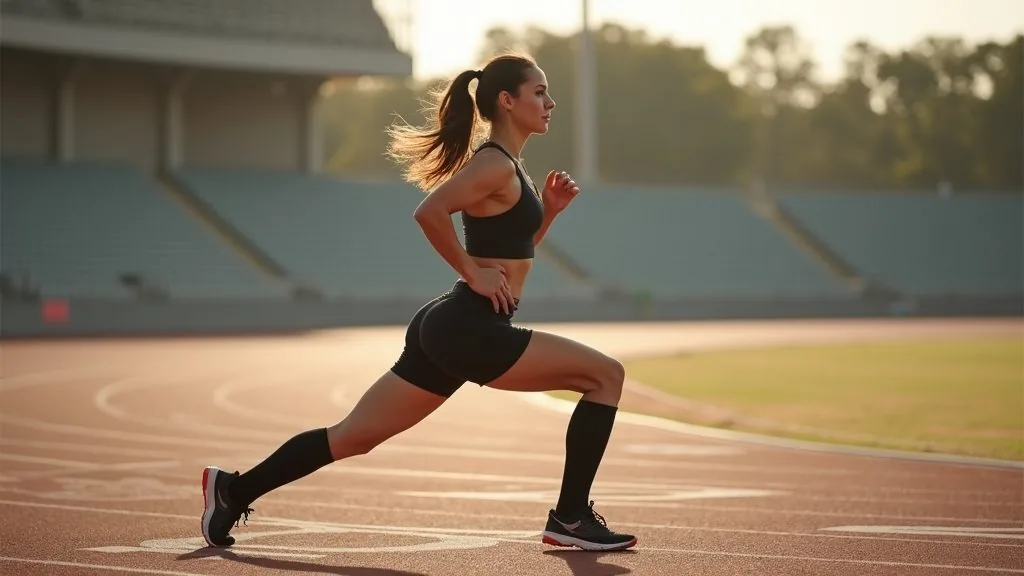
For decades, training plans were developed almost exclusively on male athletes — and then copied one-to-one for women. Yet across the month, two hormones fluctuate considerably in women of childbearing age: estrogen and progesterone. Both influence strength, recovery, thermoregulation and even injury risk. Cycle-synced training means not ignoring these fluctuations but planning around them wisely — without rigid dogma and with an honest look at the evidence.
The cycle in four phases
A normal menstrual cycle lasts between 21 and 35 days — 28 on average. It can be divided into four phases, each with a different hormonal background:
- Menstruation (day 1–5): Estrogen and progesterone are at their lowest. Cramps, back pain and fatigue are common, but by no means universal.
- Follicular phase (day 6–13): Estrogen rises sharply as the egg matures. Many women feel strongest and most energetic during this phase.
- Ovulation (around day 14): Estrogen peaks and an LH surge triggers ovulation. Performance is often high — but connective tissue is at its most lax right now.
- Luteal phase (day 15–28): Progesterone dominates and body temperature rises by 0.3–0.5 °C. In the second half, many women experience PMS symptoms.
Important: this division is a model, not a calendar law. Cycle lengths vary from cycle to cycle, and symptoms are highly individual — some women barely notice anything, others feel it clearly. That is exactly why cycle-synced training always starts with observation, not with a template.
What estrogen and progesterone do in training
Estrogen is anabolic: it supports muscle building, spares glycogen stores (more fat metabolism under load) and improves neuromuscular recruitment. In the follicular phase, when estrogen is high and progesterone low, many athletes respond better to strength and interval stimuli and recover faster. The catch: estrogen makes ligaments and tendons laxer — around ovulation, the risk of ACL and overuse injuries is measurably elevated.
Progesterone flips the picture in the luteal phase: body temperature rises, heart rate sits a few beats higher at the same workload, and breathing works harder. Carbohydrate availability worsens slightly and protein breakdown increases. In the heat and during long sessions this becomes noticeable — the same pace feels harder because the body has to spend more on cooling.
Using the phases wisely: how to plan
- Follicular phase — open the construction site: The phase of highest readiness. This is where heavy strength sessions (high weights, low reps), hard intervals and new training stimuli belong. If you plan a particularly intensive block, place it ideally in these one and a half weeks.
- Ovulation — performance yes, risk in mind: Many women feel in top shape around ovulation, and personal bests are possible. At the same time, ligaments are at their most lax: take the warm-up seriously, control jumping and change-of-direction loads, and avoid rushed technique changes.
- Early luteal phase — quality still works: In the first days after ovulation, most women still tolerate hard sessions well. In the heat, however, start drinking earlier and ensure enough carbohydrates before training — availability from glycogen stores is lower now.
- Late luteal phase — prioritise recovery: As PMS symptoms appear, readiness drops for many women: push sleep up to 8 hours, raise protein intake (target 1.6–1.8 g/kg), and adapt volume and intensity to symptoms. An easy week here is not a setback but part of periodisation — like a planned deload week, just timed individually.
- Menstruation — individual, not dogmatic: If you feel well, train normally. If you have cramps, moderate easy sessions are proven to help more than strict rest. Only with very severe symptoms is a rest day the right choice.
What the evidence actually says
Honesty is required here: research on cycle-synced training is thin. The most-cited meta-analysis (McNulty et al., 2020) found across all studies only a tiny performance dip in the early follicular phase — about one per cent on average, statistically barely robust because many studies were small and methodologically weak. The data have improved since, but the basic picture remains: on average, performance differences between phases are small, while individual differences are huge.
Two conclusions follow. First: peak performances are possible in every cycle phase — world records have been set on every conceivable cycle day. If you have a race, you race, no matter which day it is. Second: the real gain of the cycle-synced approach is not a calendar trick but self-knowledge. If you know your shins get more sensitive around ovulation or your sleep suffers before your period, you can counteract earlier — that is injury prevention and training quality, not esotericism.
And one point absolutely belongs here: a missing period is not a convenience gain but a warning sign. Amenorrhea points to an energy deficit (keyword RED-S — Relative Energy Deficiency in Sport) and comes with bone loss, hormonal disruption and performance decline. If you train hard regularly, you have to eat enough — when in doubt, get medical advice.
Practice: four steps to your personal pattern
- Track three cycles. Starting from the first day of bleeding (day 1), note daily symptoms, sleep quality, perceived performance and training response. After three cycles, your personal pattern emerges — only yours counts, not the statistics.
- Capture objective markers in parallel. Resting heart rate and heart rate variability respond to the hormonal curve: in the luteal phase, resting HR typically rises by a few beats and HRV dips slightly. If you track these anyway — our article on heart rate variability in training explains the basics — you often recognise your phases in the numbers before the symptoms arrive.
- Build the plan around the pattern, not the other way round. Hard build blocks and strength focus in the high-readiness phase, easy weeks flexibly placed where your symptoms typically appear. The classic build and recovery principles remain fully valid — the cycle is a fine adjustment, not a replacement for solid base training.
- Let symptoms lead, not the date. A strong PMS day on cycle day 22 counts more than the theoretical phase model. In the end, cycle-synced training means: listening to your body systematically.
Common mistakes
- Forcing the 28-day template onto every cycle. Hardly any cycle lasts exactly 28 days. Planning rigidly by calendar day instead of symptoms applies the model exactly the wrong way round.
- Treating menstruation automatically as a weakness week. Many women are fully capable during their period — hormones are even at their lowest then, similar to the male comparison profile. Resting "because that's what you do" wastes training time.
- Ignoring nutrition. In the luteal phase, energy needs rise slightly and carbohydrate availability drops. Running hard sessions fasted or under-fuelled here means training against your physiology.
- Ignoring a missing period. Amenorrhea is an alarm signal for energy deficiency (RED-S), not a side effect of sport. The earlier you counteract, the better for bones, hormones and performance.
- Training carelessly around ovulation. Laxer ligaments plus full training intensity is the combination that favours ACL tears — especially in jumping and stop-and-go elements.
How Peakora supports you
Peakora starts exactly where the calendar ends: the recovery monitor evaluates resting heart rate, HRV, sleep and training responses daily and turns them into your readiness — the data foundation on which cycle-based adjustment becomes meaningful in the first place. When the engine detects declining recovery, the adaptive planning shifts the next hard session automatically instead of pushing you stubbornly through the plan. That way you combine your personal cycle pattern with objective numbers.
Frequently asked questions about cycle-synced training
Do I have to skip training during my period?
No. With normal symptoms, training during menstruation is perfectly safe — moderate exercise is even proven to relieve cramps. If pain is severe, reduce intensity and volume, but a complete break is not medically necessary.
Is cycle-synced training scientifically proven?
Not conclusively yet. Meta-analyses show only very small average performance differences between cycle phases — with large individual variation. The practical benefit lies mainly in symptom management and injury prevention, not in a rigid calendar.
Does the phase plan apply with hormonal contraception?
No. The pill and other hormonal contraceptives suppress ovulation and flatten the hormonal curve — the classic phase models do not apply. Steer your training by readiness, sleep and subjective symptoms instead of cycle days.
What changes during perimenopause and menopause?
As estrogen declines, muscles and tendons lose elasticity and recovery capacity. What becomes more important: heavy strength training twice a week, more protein (around 1.6 g per kg body weight), longer recovery windows and adequate vitamin D.
Train according to your readiness
Peakora monitors recovery and form daily — and adapts your plan before a weak day turns into overload. Start free, no credit card required.
Start for free